

A poor young fellow, burdened by a pair of most disagreeable crutches, falls prey to the wicked sport of the mysterious Matches O’Grady!

Behind the Scenes
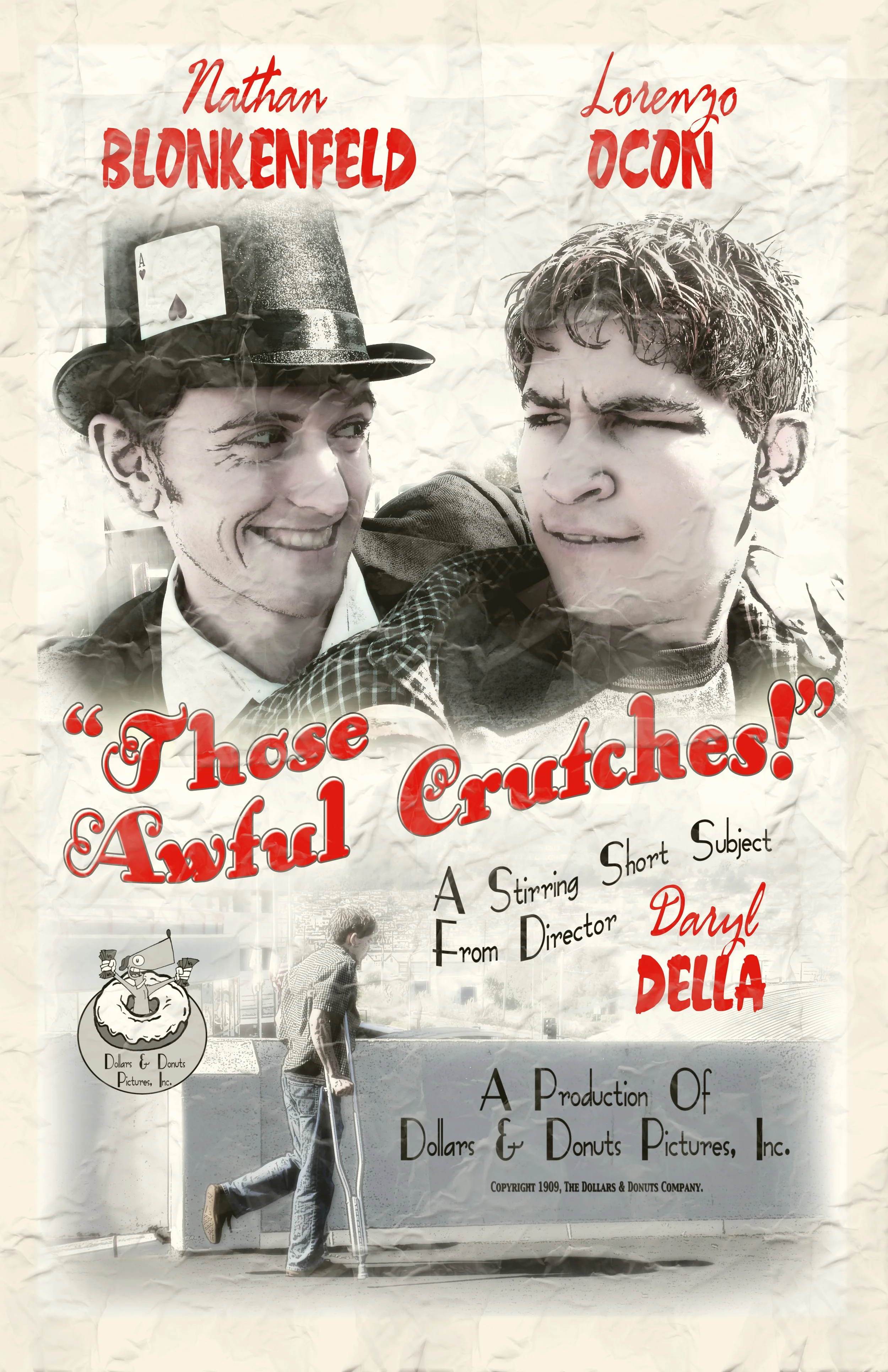
Those Awful Crutches was made for Storyboarding 101 at Academy of Art University, taught by Jonathan Fung. The assignment required Daryl to develop the film visually before shooting it, including photo storyboards and a promotional poster.
That poster gave Those Awful Crutches an unexpected place in Dollars & Donuts history. It was the first actual poster made for one of the company’s films. Considering Daryl had already been interested in graphic design for years, this is somewhat embarrassing. Apparently it took homework to make him realize movies could have posters.
The same uncomfortable lesson had already happened once before with Ninja Killface. Schoolwork, against all expectations, occasionally worked. Putting creativity inside a box, giving it specific requirements, and attaching a deadline sometimes forced ideas into a finished form that probably would’ve remained loose otherwise.
Apparently it took homework to make him realize movies could have posters.
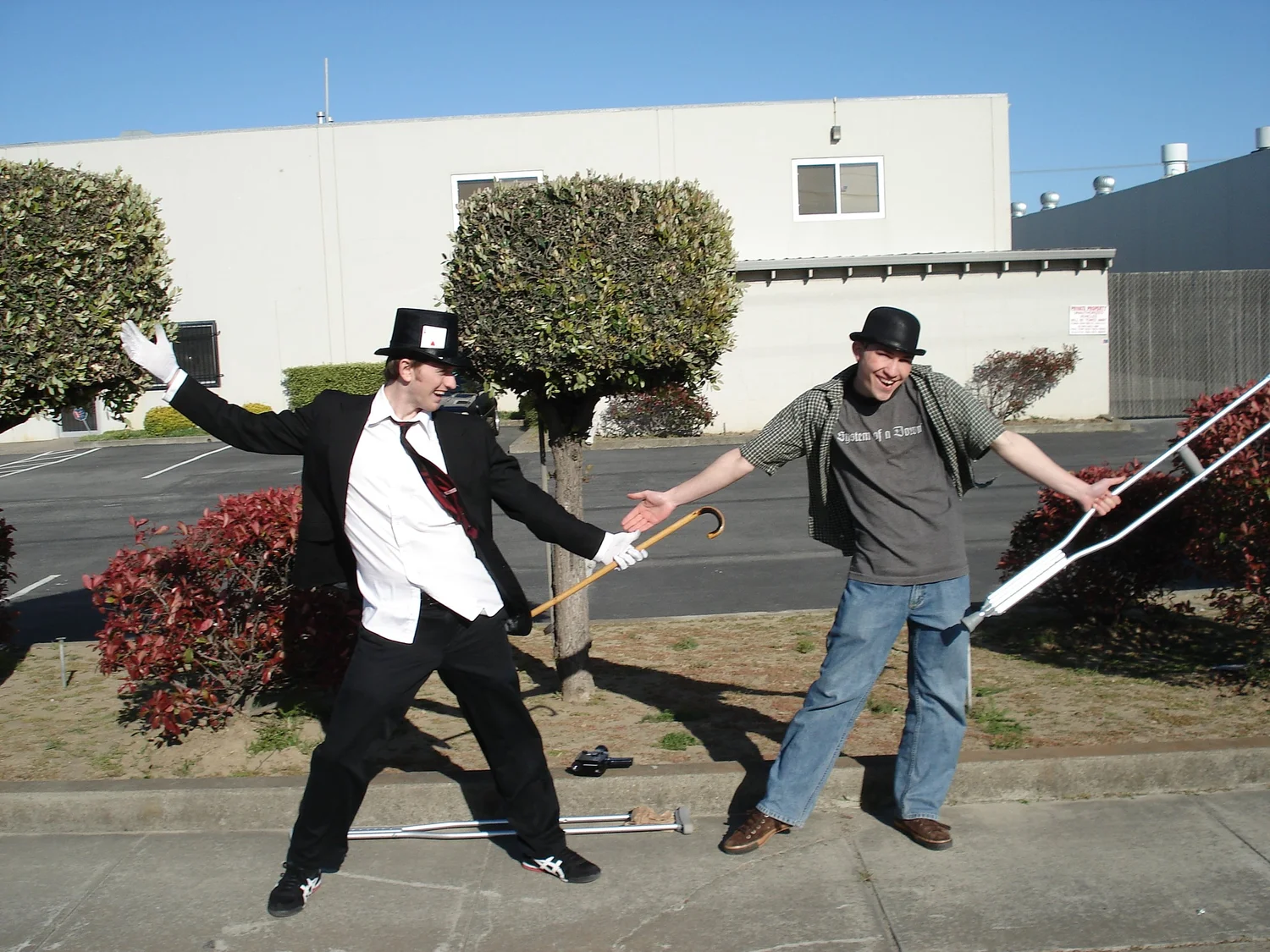
The film itself was designed as an exercise in visual storytelling. Lorenzo Ocon played a man struggling along on crutches, while Nathan Blonkenfeld appeared as Matches O’Grady, a strange trickster who terrorizes him, steals his crutches, and eventually cures him.
With dialogue removed, the story had to live almost entirely through movement, framing, exaggerated reactions, and physical comedy. The result leaned naturally toward silent-film language, with broad performances and a story simple enough to understand without anyone explaining it.
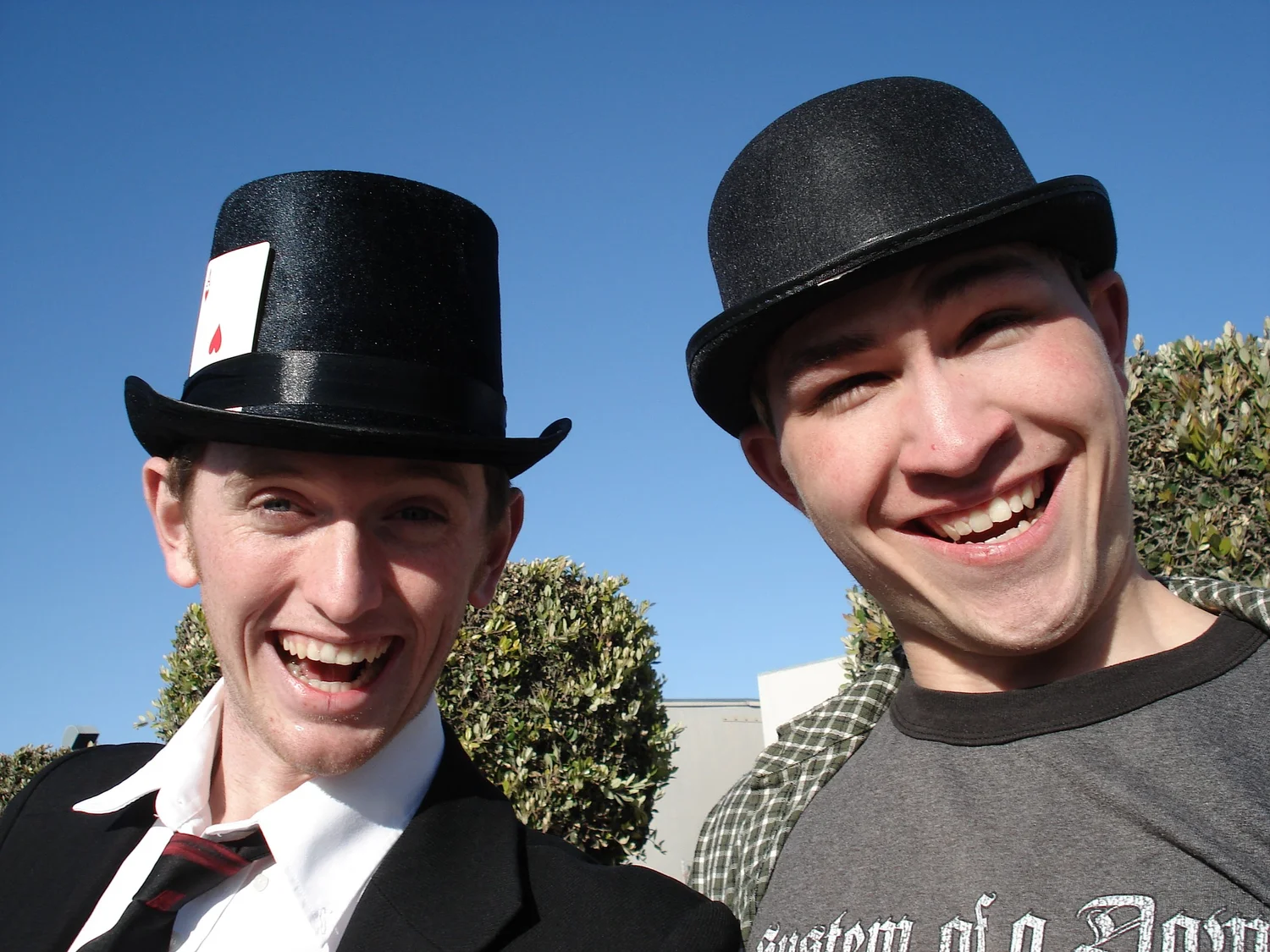
The production was shot on Super 8mm around the industrial backroads of South San Francisco, giving the little silent-film experiment a strangely grand texture compared with much of the video work Dollars & Donuts was making at the time.
The format suited the idea almost accidentally. Grain, exposure shifts, the mechanical movement of the film, and the rough industrial surroundings gave the short a period quality that would’ve been much harder to fake with the camcorders the group normally used.
The class itself didn’t end nearly as cleanly. During the semester, Daryl and Ray Revello had a falling out. Daryl became frustrated enough to drop the course before he ever had the chance to turn the project in.
When he later returned to Academy of Art, Storyboarding 101 was still waiting for him. So he took the class again with a different instructor and submitted the same Those Awful Crutches project he’d already completed the first time around. He passed.
There’s probably some lesson in there about Daryl eventually discovering he did, in fact, need the assignment.