

NATHAN BLONKENFELD
RAY REVELLO
BRANDON J. SNYDER
NATHAN BLONKENFELD
SAN FRANCISCO
SAN BRUNO
SAN JOSE
CASSETTE RECORDER GV-D800
Grandma & Pa
Heather Blonkenfeld
Joshua Nair
Brandon J. Snyder
James Beckett

Behind the Scenes
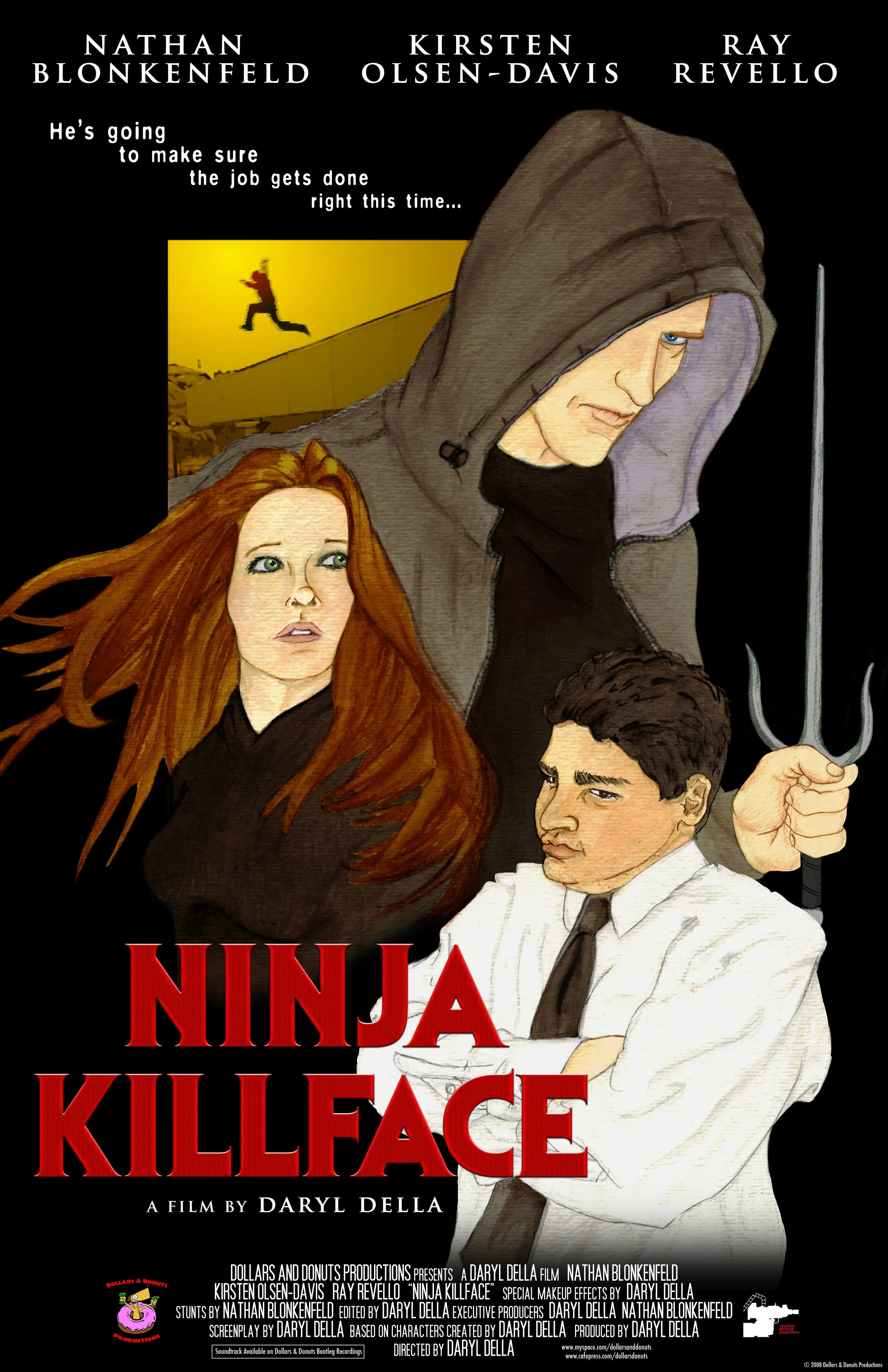
In the summer of 2003, Daryl Della made Ninja Killface because he had to.
That’s the mildly embarrassing foundation of Dollars & Donuts Productions. Throughout high school, Daryl had regarded the required senior project with open contempt. The idea that students who were about to graduate needed a school assignment to help them discover what they wanted to do with their lives seemed ridiculous to him. He already wanted to make movies. What possible good could a senior project do? Quite a bit, as it turned out.
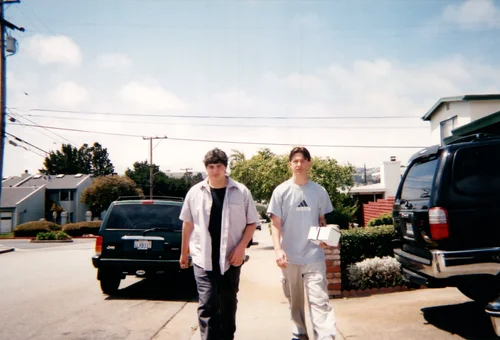
Summer school forced Daryl to choose a project, put a deadline on it, and most importantly, finish something. He had already talked about making movies with friends. He and Nathan Blonkenfeld had made comics together, discussed a horror film, and even attempted a Star Wars fan film one morning before the production collapsed when one of its actors failed to appear. Ray Revello, whom Daryl had befriended through a shared enthusiasm for movies and a shared lack of enthusiasm for schoolwork, was another frequent participant in conversations about films they intended to make someday. None of those ideas had yet become a finished movie.
The senior project supplied the one ingredient they had been missing: an obligation.
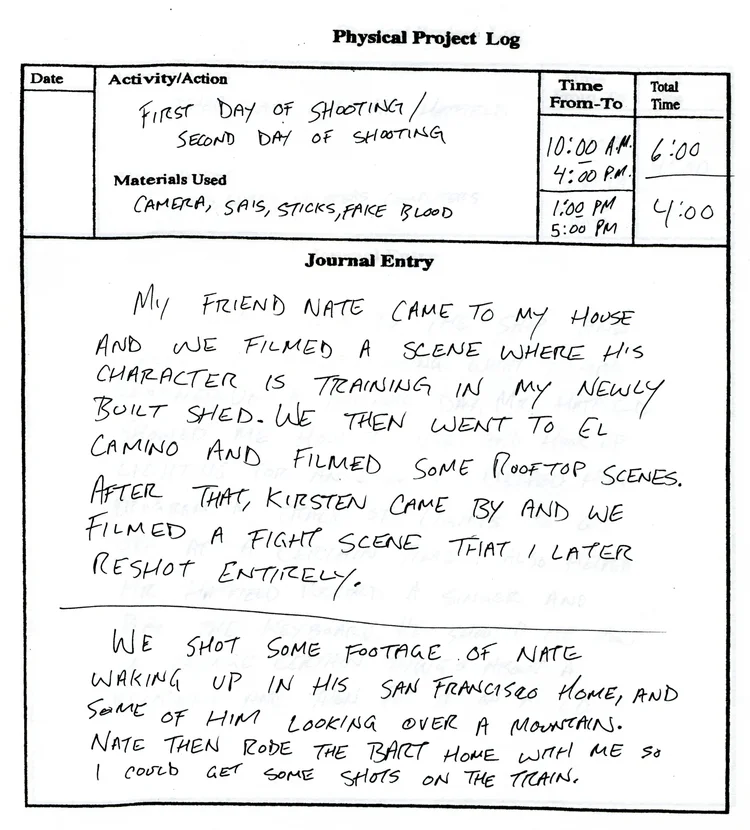
The irony would become difficult for Daryl to ignore. The school assignment he thought was pointless ended up pushing him directly into the thing he would spend the rest of his life doing.
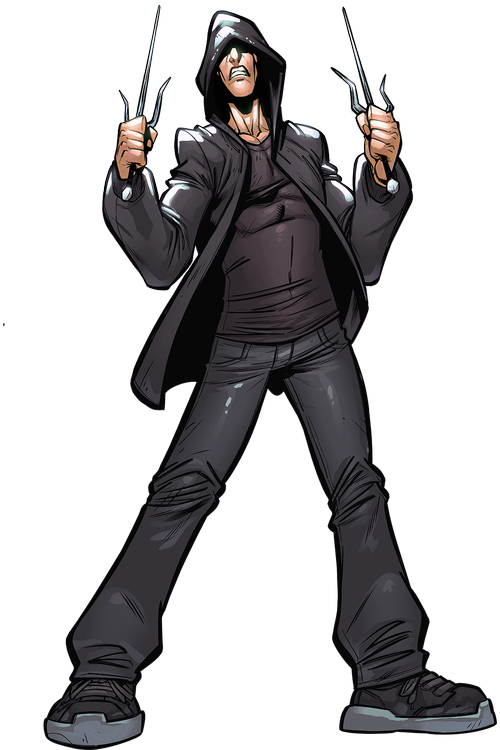
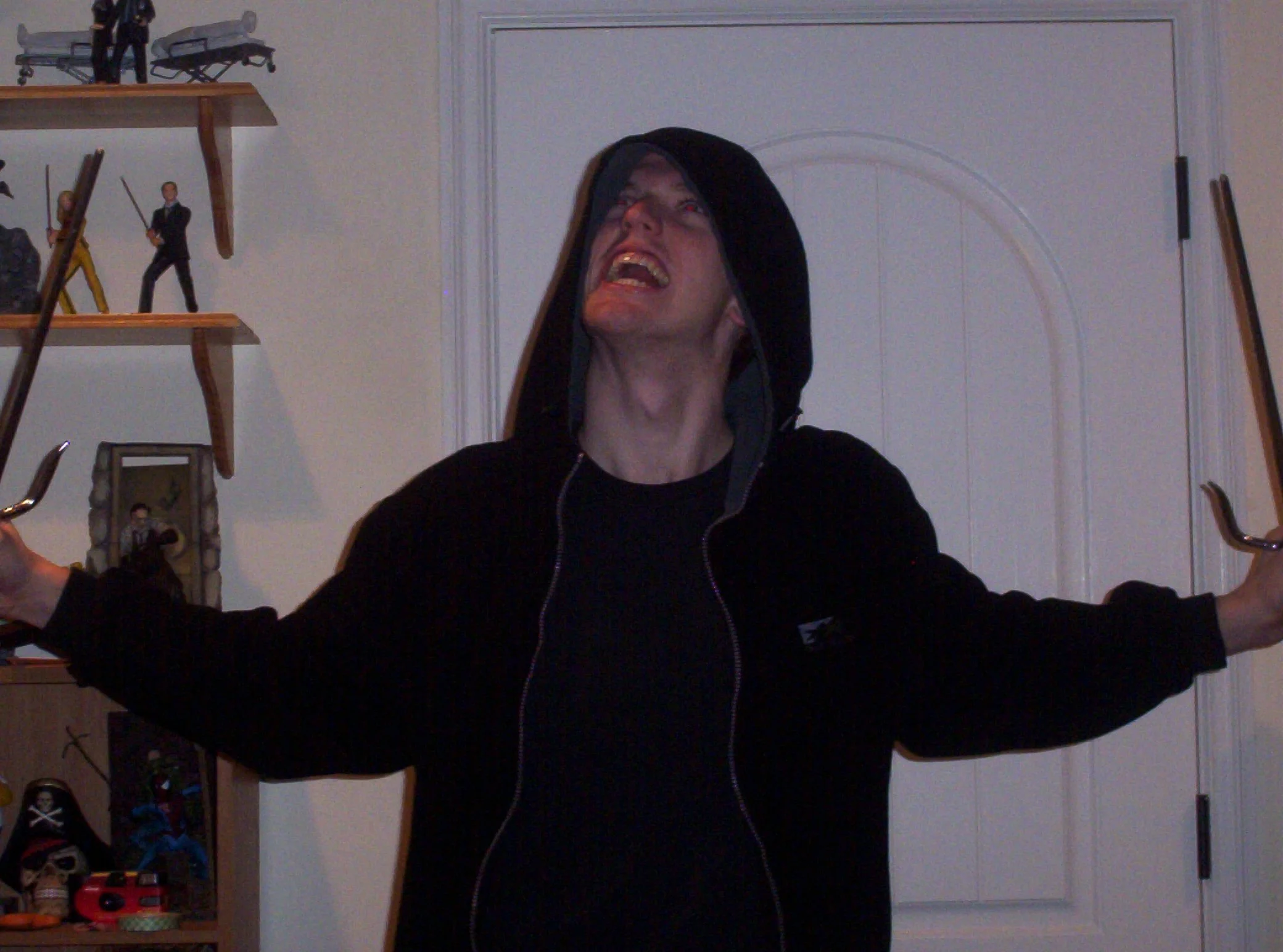
There was no grand screenplay waiting to be filmed. Daryl’s first senior-project idea was a slapstick comedy about Nate trying to conceal the corpse of a parachutist, somewhere in the neighborhood of Weekend at Bernie’s. It never got beyond the idea stage. Then Nate received a pair of sais as a gift from his father, John Blonkenfeld, and asked Daryl if he wanted to film him doing something with them.
While waiting for Nate to come over, Daryl began imagining a character who could use the weapons. A ninja hitman seemed appropriate. The name came from several years of high-school nonsense. Brandon J. Snyder had introduced the group to the idea of a hitman called “Skullface,” while Ray had coined “Killpunch” for a running joke in which he threatened to leap from the school stairs and kill someone with a punch to the top of the head. Daryl combined the two and arrived at Killface.
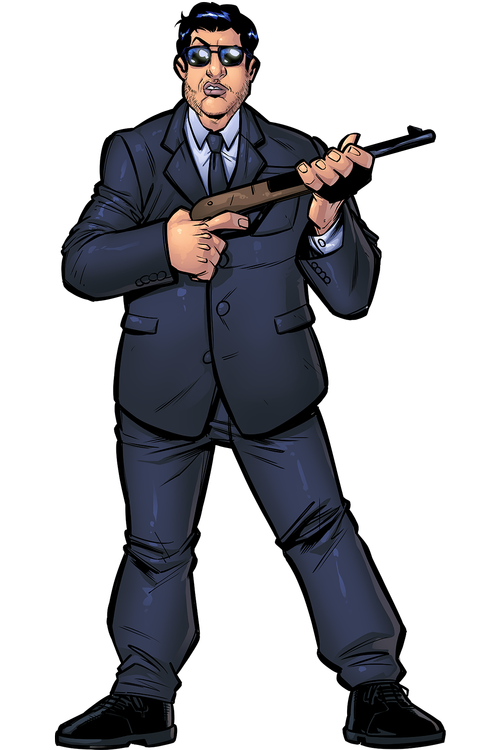
Ray had already acquired another piece of the eventual mythology. During one of the group’s teenage conversations about guns, Daryl had given him the nickname Revolver. By the time Ninja Killface needed somebody to hire its assassin, that old nickname was waiting to become a character.
The other major influence had been there much longer. Daryl’s father, Hank Della, had raised him on Clint Eastwood westerns, monster movies, action pictures, and the general pleasures of genre filmmaking. Years later, Daryl would describe Hank as one of the basic reasons a movie like Ninja Killface existed at all.
There was no company yet in any meaningful sense. There were simply movies Daryl loved, jokes shared with friends, whatever weapons Nate happened to own, and a school deadline getting closer.
The first footage was shot behind the Della family home in South San Francisco. A backyard cottage was being rebuilt at the time, and in its unfinished state it looked just enough like a makeshift training room to become Killface’s headquarters. Nate spun weapons, posed, and performed whatever movements seemed useful while Daryl recorded them.

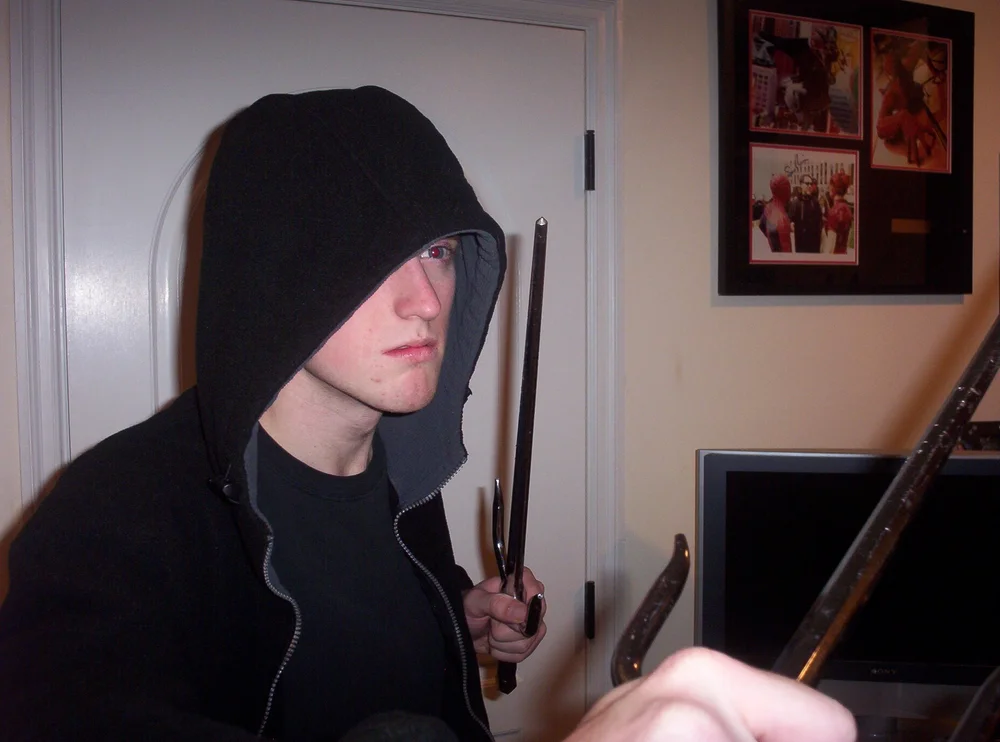
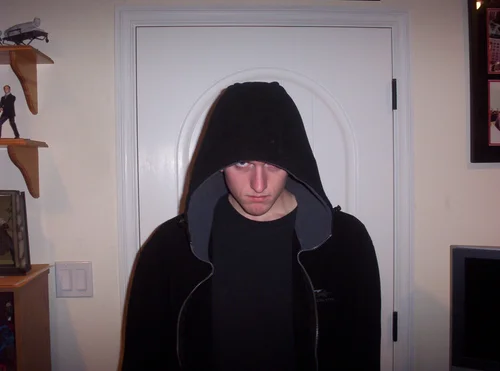
Before heading to El Camino High School for more footage, they encountered a costume problem. Nate wanted something covering his head, partly because he was self-conscious about what he called his “five-head.” Daryl had nothing suitable, so his mother searched her closet and produced an old black zip-up hoodie.
Nate pulled the hood over his head. Ninja Killface suddenly looked like Ninja Killface.
The pair went to El Camino and filmed anything that seemed remotely cinematic: Nate running across rooftops, jumping from structures, posing with weapons, performing unnecessary cartwheels, and generally treating their high school as an action-movie backlot. There was no script and very little story. They were collecting images first and worrying about what they meant later.
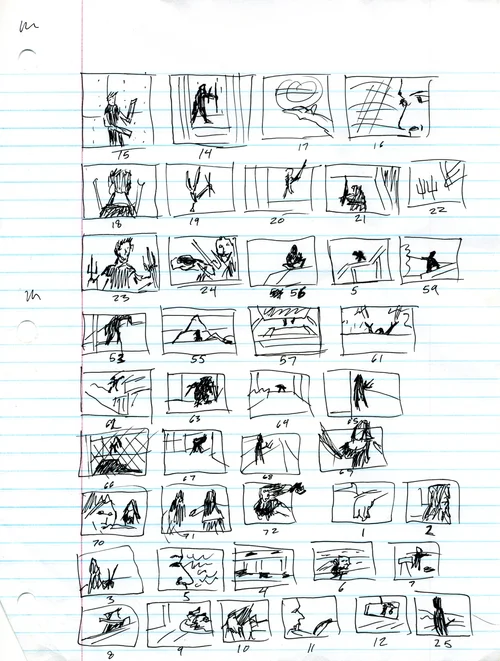
That backwards approach extended even to the storyboards. Daryl didn’t draw them as a plan for filming. He drew them afterward, making thumbnails of the footage they already had, arranging the shots into an order, and using the resulting sequence to discover what still needed to be filmed. The storyboard became an editing and organizational tool rather than a blueprint.
It was filmmaking by reverse engineering.
Daryl originally called Ray to perform a fight scene with Nate. Ray was unavailable, so Daryl called Kirsten Olsen-Davis, the girl he had fallen for and who, ten years later, would become Kirsten Della. Kirsten had little acting experience and no costume prepared. She arrived in whatever she happened to be wearing, became Aries, and fought a hooded teenage ninja at El Camino High School.
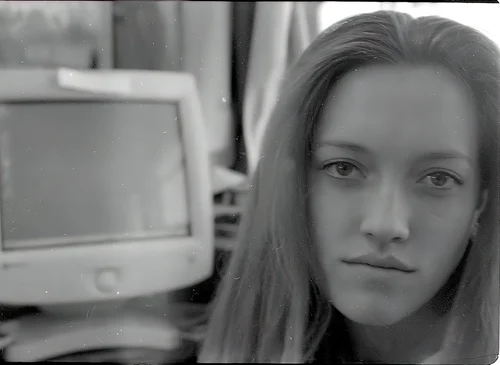
The first attempt didn’t satisfy Daryl, so they later reshot it. Unfortunately Kirsten was wearing different clothes, creating a continuity problem that required another scene purely to explain why Aries had changed from a sweatshirt into a denim jacket. It was an early lesson in a principle Dollars & Donuts would encounter many times again: if reality creates a problem, write the problem into the movie.
Since Kirsten had inherited the part Ray was originally supposed to play, Ray was reassigned. The movie needed somebody to hire Killface, so the teenage nickname became Mr. R. Revolver, mafia boss.
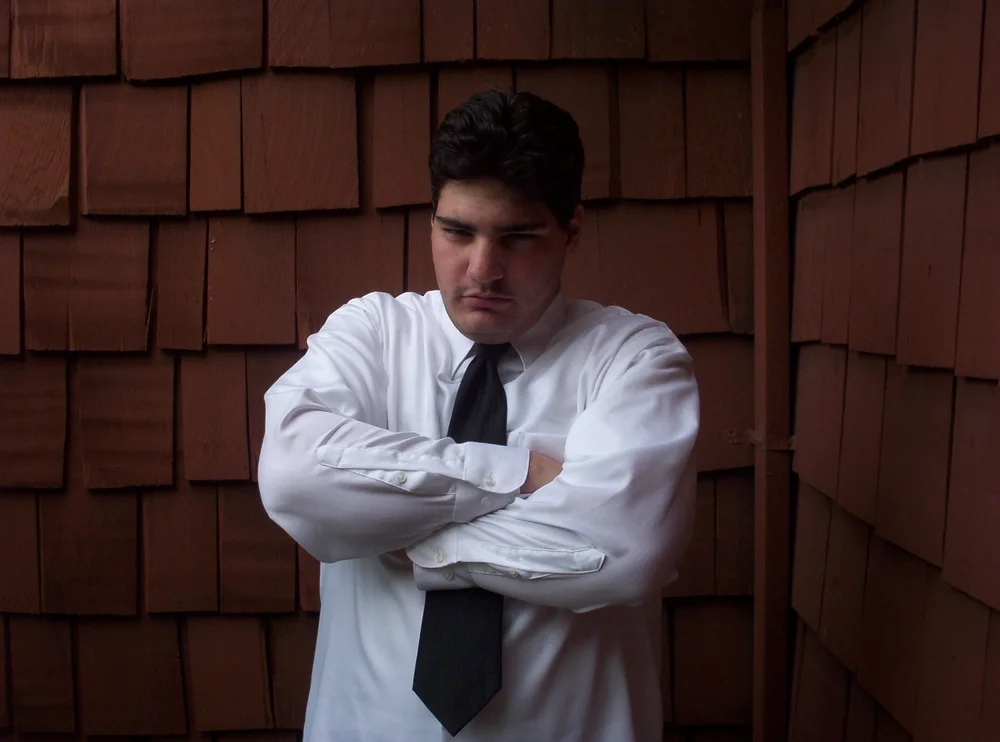
They filmed Ray’s scenes in his garage with almost no written dialogue. Daryl would give him the general idea of a line and ask him to make it better. Ray would frequently repeat almost exactly what Daryl had just suggested. For reasons that made sense at the time, they also recorded his dialogue twice, once normally and once as a Christopher Walken impression. The finished movie freely mixed the takes, leaving Revolver with a voice that changes inexplicably from one sentence to the next. It shouldn’t have worked. Instead, Revolver became one of the first recurring characters in the Dollars & Donuts universe.
The rest of Ninja Killface was assembled in much the same way. Nate’s sister’s house in San Francisco became another location. Her dogs were pressed into service to establish that the assassin possessed some degree of humanity. Nate had recently earned his driver’s license, which was sufficiently exciting to a group of teenagers that Daryl filmed him driving his sister’s Volvo for an extraordinary amount of time. Only later was the footage assigned a dramatic purpose, with Killface supposedly contemplating whether he could bring himself to kill Aries. The sequence runs to Linkin Park’s “Easier to Run” and contributes almost nothing to the plot.
Everything was shot on the Della family camcorder, a Sharp Viewcam VL-H860. The camera recorded in the full majesty of 640 × 480, which did not stop Daryl from trying to make the footage look as much like a feature film as possible. The Viewcam offered a letterbox mode that added black bars to the top and bottom of the image, so naturally they used it. To a bunch of teenagers in 2003, black bars meant cinema.
At first, Daryl wasn’t even certain how the footage could be edited. He considered trying to assemble the scenes in sequence onto VHS before discovering iMovie 1.0 sitting on his iMac. He began experimenting with opening credits and learned the elementary mechanics of nonlinear editing while making the movie itself. The computer barely tolerated the footage, crashed constantly, and forced him to borrow Joshua Nair’s camera because Daryl’s own lacked a FireWire connection.
The title emerged during that process. Ninja Hitman briefly gave way to Ninja Killface: Hitman for Hire, which was eventually shortened to the name that stuck.
There was no distinction yet between writing, directing, editing, production design, or simply figuring things out because nobody else was going to do it. The movie was being invented at the same time Daryl was learning how movies could be put together. That became a fairly durable business model.
The first audiences were Daryl’s brother and father, followed by a family screening on a larger television. Then came the audience that actually mattered to the immediate future of the picture: the senior-project judges. Daryl brought Ray with him because he was nervous, but the teacher, Ms. Fiedler, was a total bitch and threw Ray out immediately. Daryl snuck him back into the panel room, and the judges didn’t seem to mind. The panel’s responses were inconsistent enough to suit the film. One judge enthusiastically praised what he called “Ninjaface.” Another objected to the violence against women. A police officer on the panel particularly enjoyed the man locked in a trunk, Aries getting punched, and the bullet wound added to her head.
Most importantly, Daryl received an A.
The school requirement he had spent years dismissing had done exactly what it was supposedly designed to do. It had made him complete something.
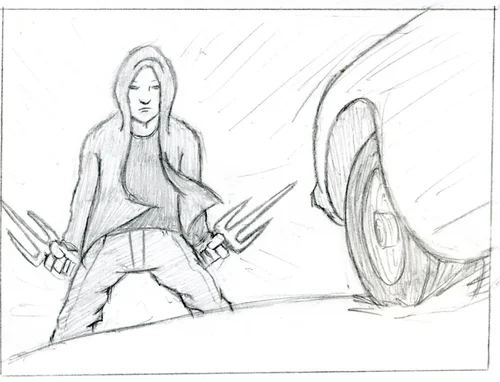
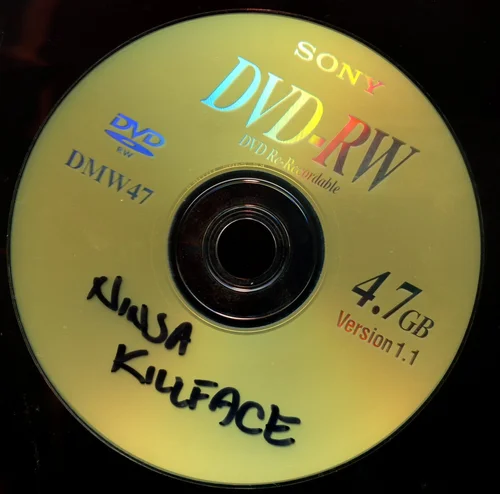
The reaction was immediate. Daryl began thinking about a sequel and a comic book before the first film had much time to settle. Snyder wrote pages for a proposed comic, while Daryl ignored economics class to draw character designs. The comic stalled because drawing the same character consistently for more than one panel proved considerably harder than expected. A soundtrack was assembled in an edition of one. Ninja Killface II began production. After graduation, a new G5 computer allowed Daryl to re-edit the original in Final Cut Pro for a Special Edition DVD.
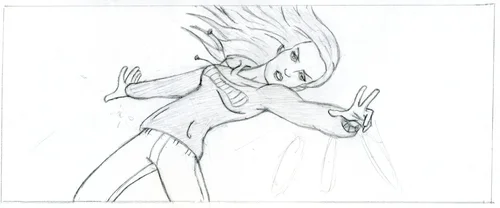
By 2004, friends were already pestering him online for copies of the DVD. By 2008, the fifth-anniversary release treated this primitive thirteen-minute senior project as something worthy of commentaries, retrospectives, location tours, alternate material, and a history of its own. The joke had started becoming an archive.
What matters now is not that Ninja Killface secretly contained a polished filmmaker waiting to emerge. It very obviously did not. The fights are clumsy. Continuity is negotiable. The plot was constructed after much of the footage already existed. The movie contains shots because Nate had just learned to drive, costumes because somebody happened to arrive wearing them, and a central character whose defining wardrobe came out of Daryl’s mother’s closet.
What it contained instead was the beginning of a method.
Use the people who are there. Turn limitations into jokes. Steal locations from ordinary life. If something interesting happens, film it. If the footage doesn't quite make sense, find a way to make it make sense in the edit. Make the movie with what you have rather than waiting for permission to make the movie you wish you could afford.
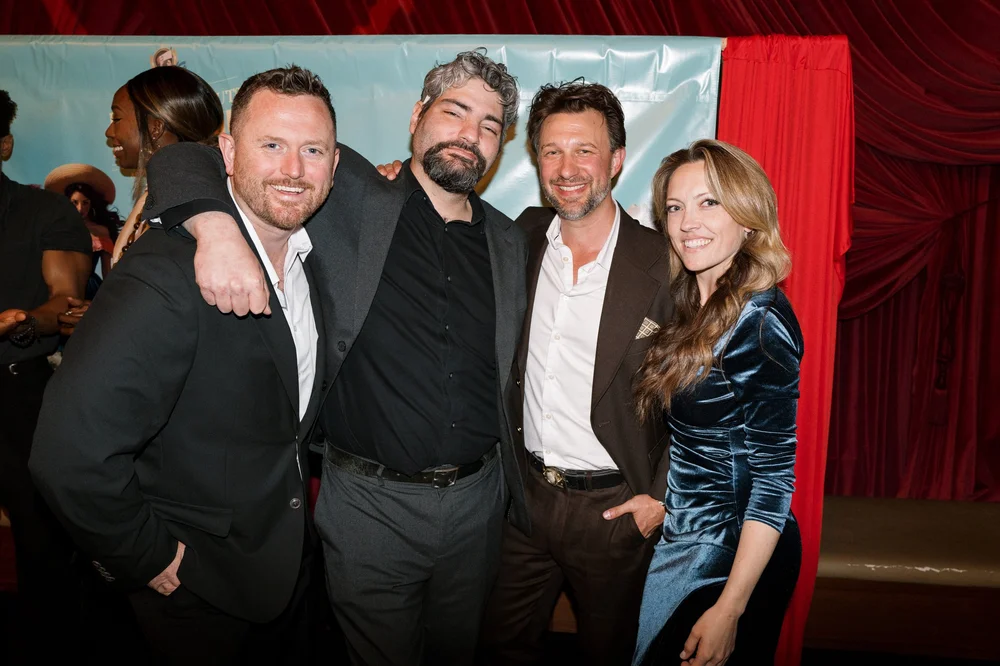
Two decades later, the original Ninja Killface screened again in Austin alongside its 2024 remake, with Nate, Ray, Daryl, and Kirsten together for a film that none of them could have reasonably expected to still matter when they made it as teenagers.
The senior project was supposed to help Daryl decide what he wanted to do with his life. Annoyingly, it worked.