

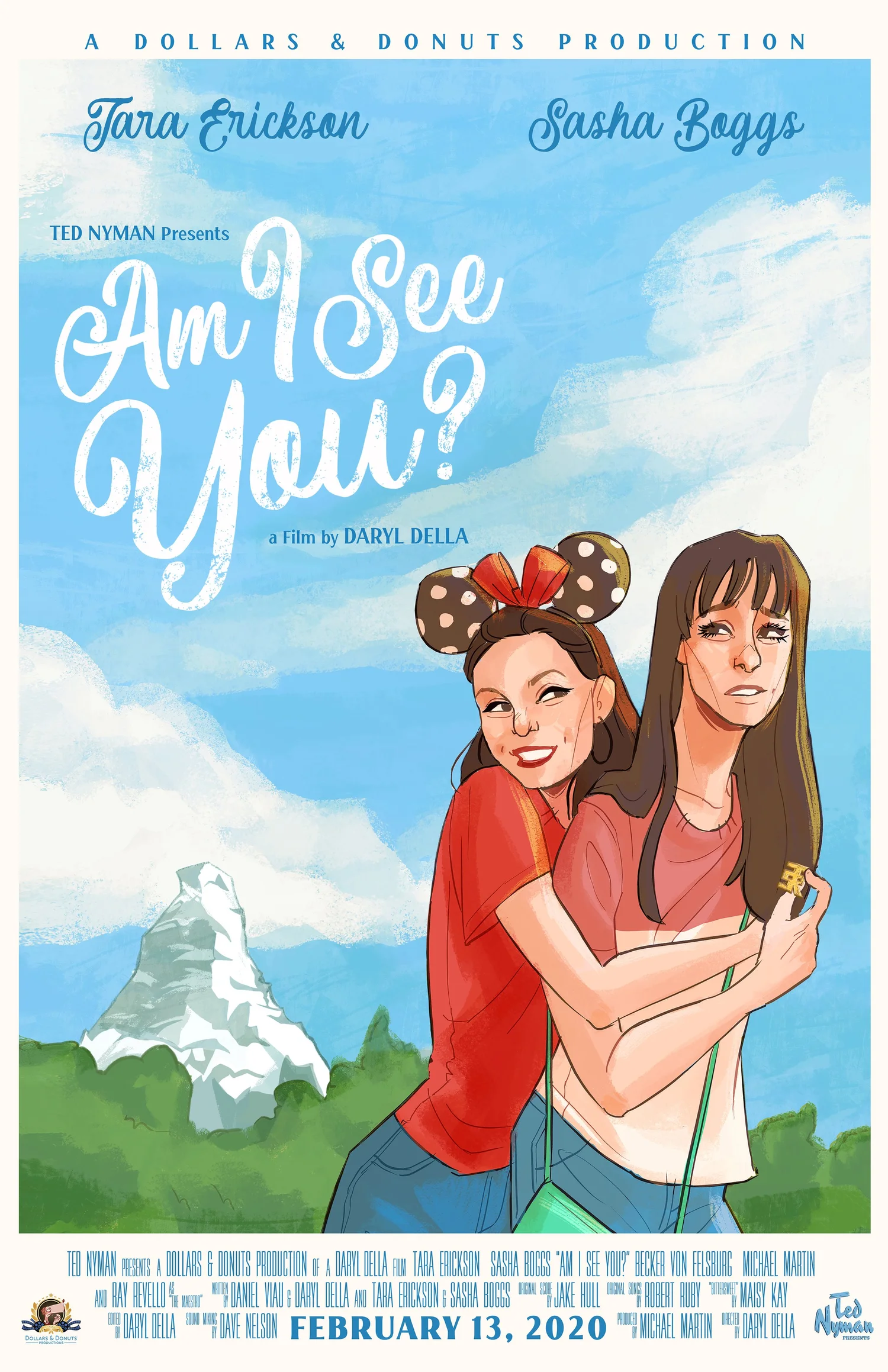
Whitney is trying to learn why a strange old Disney pin mattered so much to her late mother. A trip to Disneyland leads her and Alana from harmless collectors to a secretive cult willing to do almost anything to get it, forcing Whitney to decide what the pin is actually worth to her.
DARYL DELLA
MICHAEL MARTIN
JOHN BAIN
NINA DELLA
MAISY KAY
ROISIN MADDEN
MITCHELL MARTIN
RICHARD ROBINSON
KIRAN UMAPATHY
GINO VIGIL
BECKER VON FELSBURG
DARYL DELLA
KIRSTEN DELLA
ERIC HOWARD
LONI LONZO
SINÉAD MADDEN
PATTY MARTIN
JAMES NEIL
DAVID QUINTANILLA
WILL RANKIN
BRANDON REED
KIRAN UMAPATHY
ZACH WATSON
HENRY ETHAN DELLA
ELIAS DALTON DELLA
JENNIFER STERLING
MITCHELL MARTIN
BECKER VON FELSBURG
TORIAN ALLEN
KIRSTEN DELLA
MICHAEL MARTIN
MITCHELL MARTIN
KIRSTEN DELLA
DAVID QUINTANILLA
LONI LONZO
Hank & Nina Della
Dorothy Della
George & Patty Martin
Marcus Martin
Vicky & Terry Edgington
David Quintanilla
Jennifer Shalamanov
Joe, Gloria, & Aria Valiente
John Hampton
Brian Grima
Alex James Muscat
Misha Sundukovskiy
Lauren Bailey
Freedom Blackard
Helynne Felix
Kathryn Flucht
Kim Ho
Yusuf MohsinAlly
Amber Ondricek
Amparo E. Romero Ortiz
Shelley Osborne
Patrick Ostrander
Linos Owusu-Asare
Roula Seikaly
Rich Schaeffer
Christopher Wing
Jennifer Wu
Mike Fields
Alisia Perez
Paul Hickman
Meghan McCarthy
The Anaheim Hotel
PANASONIC LUMIX GH5
BLACKMAGIC STUDIO CAMERA
dedicated in loving memory to
RED Epic Monstro
5.1 Surround Sound
Best Actor - Ray Revello - Only the Best Film Awards
Best Ensemble Cast - Only the Best Film Awards
Best Score - Jake Hull - Only the Best Film Awards
Best Musical - Only the Best Film Awards
Mr. HoleHead's Warped Dimension
Coastside Comics, Pacifica, CA
Daly City, CA
Disneyland, USA
Soundwave Studios, Oakland, CA
Trader Sam's Enchanted Tiki Bar, Disneyland Hotel, Anaheim, CA
Udemy, 600 Harrison St, San Francisco, CA
The Am I See You? Collection

Am I See You? is back on Blu-ray for the first time since 2020 with brand new cover art and a fully loaded disc. Whitney Nelson’s search for meaning takes her deep into the strange world of obsessive collectors, unhinged cultists, and one unforgettable mystery tucked behind a simple pin. Shot inside Disneyland USA with real locations and a fearless cast, the film mixes comedy, suspense, and heartfelt weirdness in a way only Dollars & Donuts can deliver.

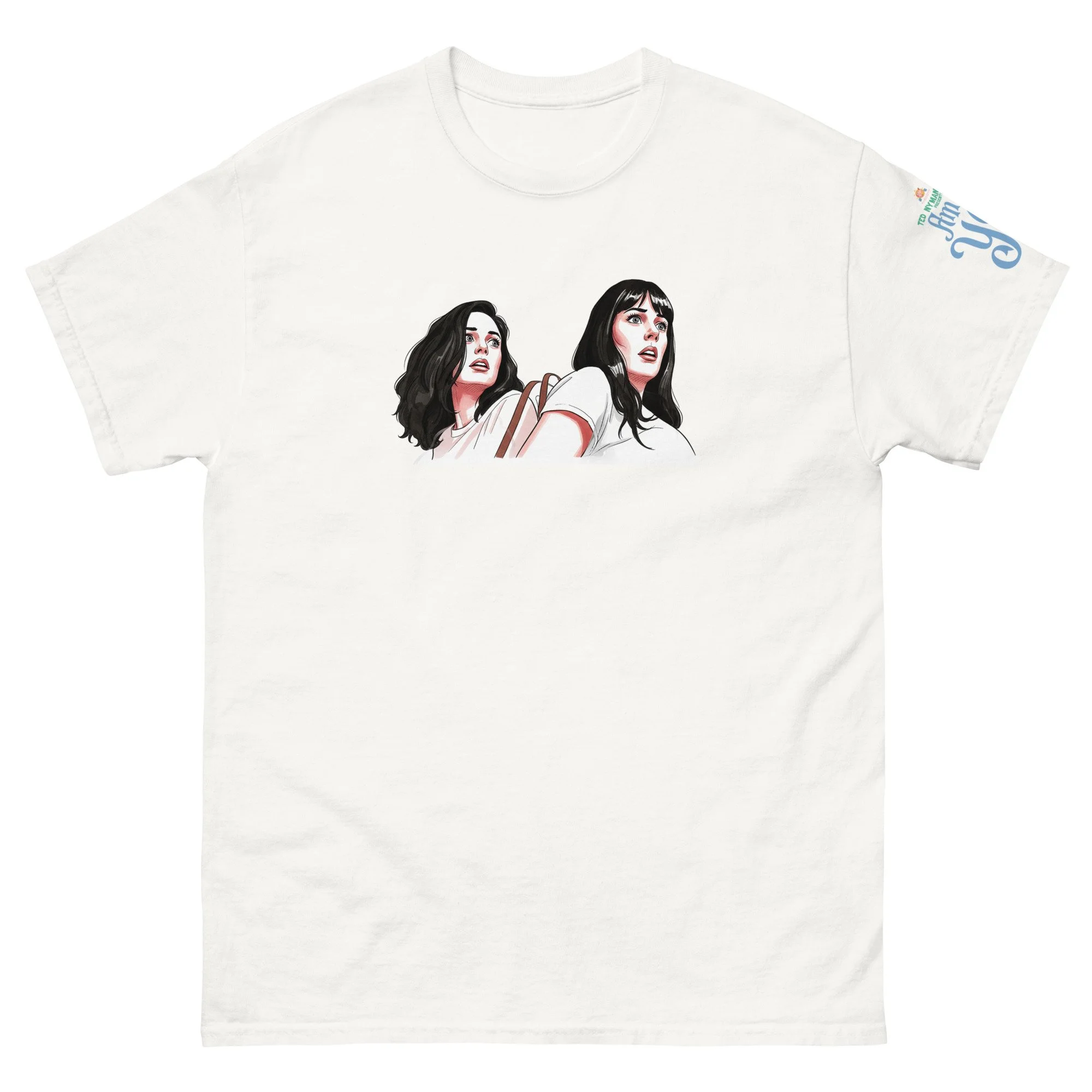
• 100% cotton
• Sport Grey is 90% cotton, 10% polyester
• Ash Grey is 99% cotton, 1% polyester
• Heather colors are 50% cotton, 50% polyester
• Fabric weight: 5.0–5.3 oz/yd² (170-180 g/m²)
• Open-end yarn
• Tubular fabric
• Taped neck and shoulders
• Double seam at sleeves and bottom hem
• Blank product sourced from Honduras, Nicaragua, Haiti, Dominican Republic, Bangladesh, Mexico
Disclaimers:
• Due to the fabric properties, the White color variant may appear off-white rather than bright white.
• Dark color speckles throughout the fabric are expected for the color Natural.
This product is made especially for you as soon as you place an order, which is why it takes us a bit longer to deliver it to you. Making products on demand instead of in bulk helps reduce overproduction, so thank you for making thoughtful purchasing decisions!


• Ceramic
• 11 oz mug dimensions: 3.79″ (9.6 cm) in height, 3.25″ (8.3 cm) in diameter
• 15 oz mug dimensions: 4.69″ (11.9 cm) in height, 3.35″ (8.5 cm) in diameter
• Lead and BPA-free material
• Colored rim, inside, and handle
• Dishwasher and microwave safe
This product is made especially for you as soon as you place an order, which is why it takes us a bit longer to deliver it to you. Making products on demand instead of in bulk helps reduce overproduction, so thank you for making thoughtful purchasing decisions!
Original trailer
Winner of Best Trailer at the Another Hole in the Head Film Festival, this was the original preview for Am I See You?
premiere commercial
Disneyland magic comes to downtown San Francisco in the original commercial for the 2020 premiere of Am I See You? at the Embarcadero Center Cinema. Starring Meghan Golovinova
Characters
-

Whitney Nelson
TARA ERICKSON
-

Alana Ancliffe
SASHA BOGGS
-

Sherman
BECKER VON FELSBURG
-

The Maestro
RAY REVELLO
-

Maddox
MICHAEL MARTIN
-

Braddox
MITCHELL MARTIN
-

ALISH
MAISY KAY
-

Gooby
GINO VIGIL
-

Cultists
VARIOUS
-

Shelley
SHELLEY OSBORNE
-

Walt Disney
DARYL DELLA
-

Cigar Store indian
MAIN STREET, USA

Behind the Scenes
The first spark for Am I See You? came from an accident. During a family trip to Disneyland, Daryl met up with Tara Erickson and her friend Steve Moulton. Steve was asked to take a photograph of Tara and Daryl with Daryl’s Panasonic GH5, but hit the wrong button and recorded a few seconds of video instead.
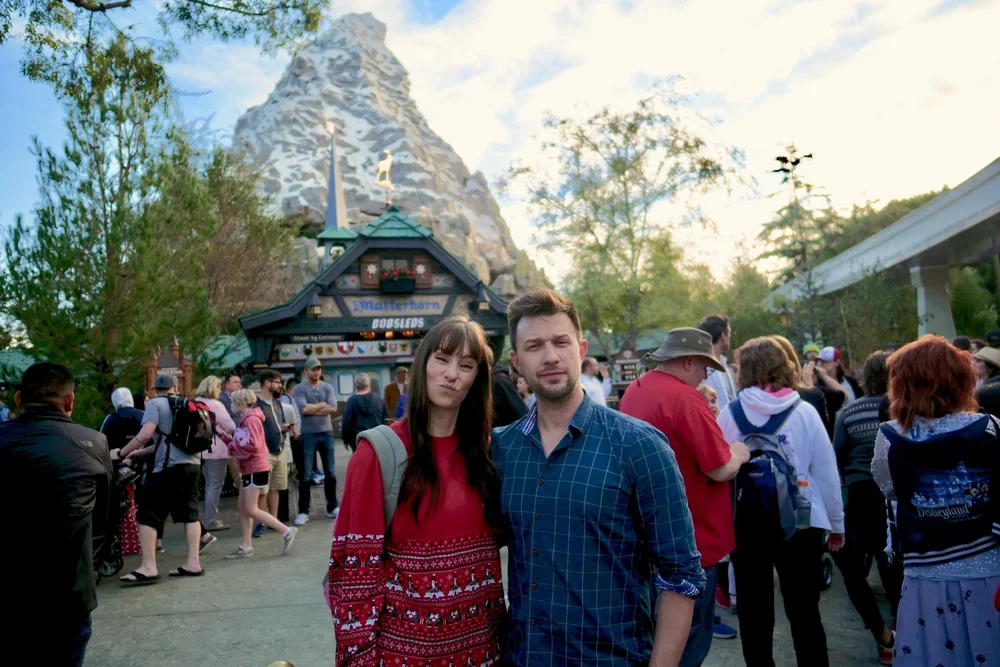
It was nothing more than a stray clip, but when Daryl watched it back, Disneyland suddenly looked different through the GH5 and his 12mm Lumix lens. The park had been filmed by Dollars & Donuts before, but never with equipment capable of rendering it with that kind of scale and texture. For the first time, Daryl could imagine shooting an entire narrative there and having it look like a movie rather than vacation footage with actors in it.
The idea was also an opportunity to approach Disney from an angle he had not seen much in contemporary independent film. Escape from Tomorrow had famously used a guerrilla production inside Walt Disney World to turn the parks into something hostile and grotesque. Daryl wanted almost the opposite. He loved Walt Disney.
More specifically, he loved the version of Disney associated with Walt himself: optimism, invention, showmanship, sentimentality, and the slightly insane conviction that an idea could be made real if enough effort was thrown at it. Daryl had much less affection for the increasingly corporate machinery surrounding the modern company, and Am I See You? began taking shape as a way to separate those two things. It could poke fun at Disney obsession and commercialization without treating the underlying affection for the place as something foolish.
The movie would be cynical about the collectors.
It would not be cynical about the magic.
The central idea came from Disney pin trading. Daryl had been around the hobby for years through his mother, Nina Della, who collected and traded pins during family trips. The more extreme collectors fascinated him. Some arrived at the parks covered in enormous quantities of pins, carrying cases and binders, treating what had begun as a small souvenir tradition with the seriousness of commodities trading. There was something funny about it, but also something useful for a story.
Daryl began imagining the most obsessive collectors as an actual cult, people who had become so consumed with preserving and possessing pieces of Disney history that they had lost sight of whatever made those objects meaningful in the first place. It offered a way to make fun of collector culture while also taking a swipe at the modern corporate machinery that encouraged the obsession.
He brought the premise to Daniel Viau, a writer Daryl had previously worked with on an unproduced project. The initial pitch was deliberately simple: “A woman and her friend deal with a cult of Disney pin collectors.”
Daniel returned several short story possibilities. One of them gave the joke an emotional center. Instead of simply stumbling across a valuable pin, Whitney would inherit one connected to her late mother and begin searching for an explanation of why it had mattered so much to her. The collectors wanted the object. Whitney wanted the memory attached to it. That distinction became the movie.
It also made the project unusually personal for Daryl. Much of the Dollars & Donuts catalog had grown out of his relationship with his father, Hank Della, whether through scripts Hank had written or simply their shared enthusiasm for movies. Am I See You? gave Daryl a chance to build something around his mother instead, drawing directly from Nina’s love of Disney and the family trips that had surrounded it.
Daniel’s early version of the story gave Whitney a male best friend named Alan. Daryl changed him to Alana. Part of the reason was practical. He already had Sasha Boggs in mind for the role. More importantly, Daryl liked the idea of building the movie around two women without turning their friendship into preparation for a romance. Dollars & Donuts had spent plenty of years making movies about angry men punching, shooting, or threatening one another. There was no particular reason this story needed another one at its center.
The romantic material instead belonged to Sherman, one of the collectors who initially leads Whitney and Alana deeper into trouble before eventually turning against the cult. His name was a nod to the Sherman Brothers, and the character was deliberately built in the tradition of the oddball supporting figures scattered through older Disney live-action films. He begins as a nuisance, becomes an accomplice, and eventually gets the chance to do something decent. That movement helped keep the film from becoming purely a satire of Disney fandom. Even some of the people caught up in the obsession could still find their way back to the part that mattered.
Once the story had taken shape, Daryl realized that Whitney’s relationship with her mother carried an uncomfortable resemblance to Tara Erickson’s own life. Tara had also lost her mother. Daryl hesitated before sending her the script. The role had been written with Tara in mind, but the overlap now felt close enough that he worried the material might come across as exploitative or simply be too painful to ask her to perform.
Tara saw it differently. Rather than being put off by the coincidence, she connected with it. The material gave Whitney’s search for her mother something that could not have been manufactured through casting alone, and Tara understood immediately why the story mattered. From that point forward, the movie’s emotional center was no longer theoretical.
The title came from the opening cadence of the Mickey Mouse Club March: “M-I-C… K-E-Y…” Am I See You? was meant to sound like a garbled echo of that phrase, something recognizably Disney without simply quoting it. Daryl was never completely satisfied with the title, but no better alternative ever emerged and eventually it became too embedded in the project to change.
Later, he developed a more personal explanation for it. In his own head, the phrase became something Whitney might have said to her mother as a child, the kind of slightly mangled sentence that only makes sense inside a family. Daryl came to like that interpretation enough that he regretted never putting it into the script. It was one of several places where he felt the finished story could have communicated its emotional ideas more clearly.
The early development of Am I See You? coincided with one of the hardest periods in Daryl’s family life. Around this time, his father, Hank Della, was diagnosed with heart disease and given a grim prognosis. The news immediately changed the emotional temperature of the year. Hank had been woven into Dollars & Donuts for so long, as a writer, supporter, performer, sounding board, and constant presence, that the possibility of losing him was impossible to separate from the work.
Daryl gathered the core group for lunch at Westlake Joe’s, one of their regular meeting places. Michael Martin, Mitchell Martin, Ray Revello, Becker Von Felsburg, and Lorenzo Ocon were there. Before discussing movies, Daryl told them what was happening with his father.
The group tried to reassure him and offered the kind of optimism people offer when they don’t know what else to say. Daryl appreciated it, but he also wanted them to understand that the year ahead might become difficult without warning.
Then, because this was Dollars & Donuts, the conversation eventually returned to movies. One of them was Am I See You?
Daryl presented the project as something deliberately different for the company. For all the expanding ensemble of the previous few years, Dollars & Donuts had still built most of its stories around men. Am I See You? would put two women at the center from beginning to end, and Daryl already knew who he wanted. Tara Erickson was Whitney. Sasha Boggs was Alana. The characters had been developed with them in mind.
Michael’s response was immediate: “That’s great, but let’s hire anyone but Sasha and Tara.”
Daryl rejected the idea just as quickly. To him, there was no reason to replace two actresses who had helped inspire the material, especially when the characters had already been shaped around their personalities and chemistry. Michael had a habit of treating casting and collaborators as interchangeable parts when it suited him. Daryl increasingly did not. He told Michael, in effect, that Tara and Sasha were the cast and that he needed to learn to work with them.
It was another small argument in what was becoming a much larger pattern. Michael kept trying to exercise control by questioning people Daryl had already chosen. Daryl was becoming less interested in asking permission.
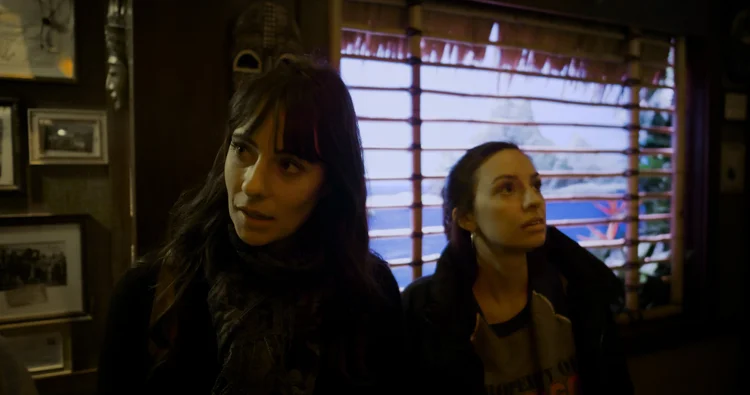
The practical problem was simpler. Disneyland was expensive. The script required substantial footage inside the park, which meant that production costs were no longer limited to cameras, actors, food, transportation, and locations. They were effectively planning a group Disneyland trip and trying to make a movie in the middle of it.
The production was therefore divided into two major phases. The Disneyland material would be shot first, while the cult sequences and more controllable dramatic material could be staged later in a warehouse.
To help fund it, Dollars & Donuts launched a Kickstarter campaign with a $10,000 goal.
For a company accustomed to financing most projects out of pocket, it was an enormous number. Daryl decided that if they were going to ask people for that much money, they needed to show exactly what they were trying to make. The campaign would be accompanied by a steady stream of videos, production updates, demonstrations, interviews, and behind-the-scenes material, opening up the process more than Dollars & Donuts ever had before.
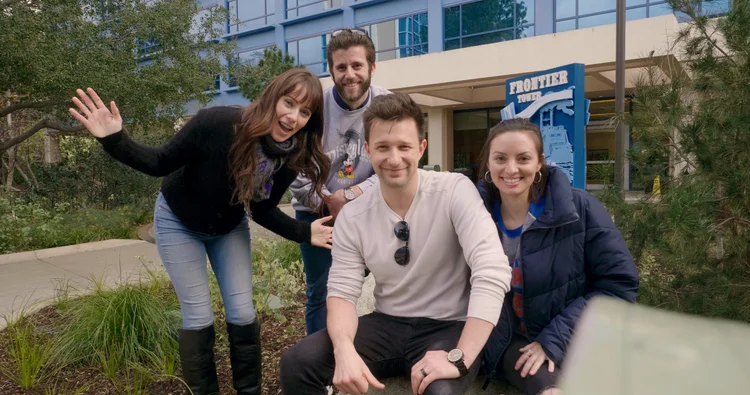
Before the campaign fully launched, Daryl and Michael drove to Los Angeles for an early test with Tara and Sasha. The four met at Downtown Disney, where they filmed test material and later worked through the script at Trader Sam’s Enchanted Tiki Bar. Tara and Sasha fell naturally into the rhythm Daryl had imagined for Whitney and Alana, talking over one another, needling each other, and finding the friendship in the dialogue without much effort.
It also gave the group its first real opportunity to confront the logistical problem waiting for them. Disneyland could not be treated like an ordinary location. Thousands of people moved continuously through every background. Large lighting setups were impossible. Crew size had to stay minimal. Anything that looked too much like a professional production risked attracting exactly the kind of attention they did not want.
So Daryl, Tara, Sasha, and Michael walked the area thinking less about how they would normally shoot a scene and more about what they could get away with.
What lenses were fast enough? How little equipment could Daryl carry? Where could actors stand without blocking traffic? How long could a setup survive before somebody noticed them?
The production would have to be fast, discreet, and adaptable.
Fortunately, those were skills Dollars & Donuts had been practicing for fifteen years.
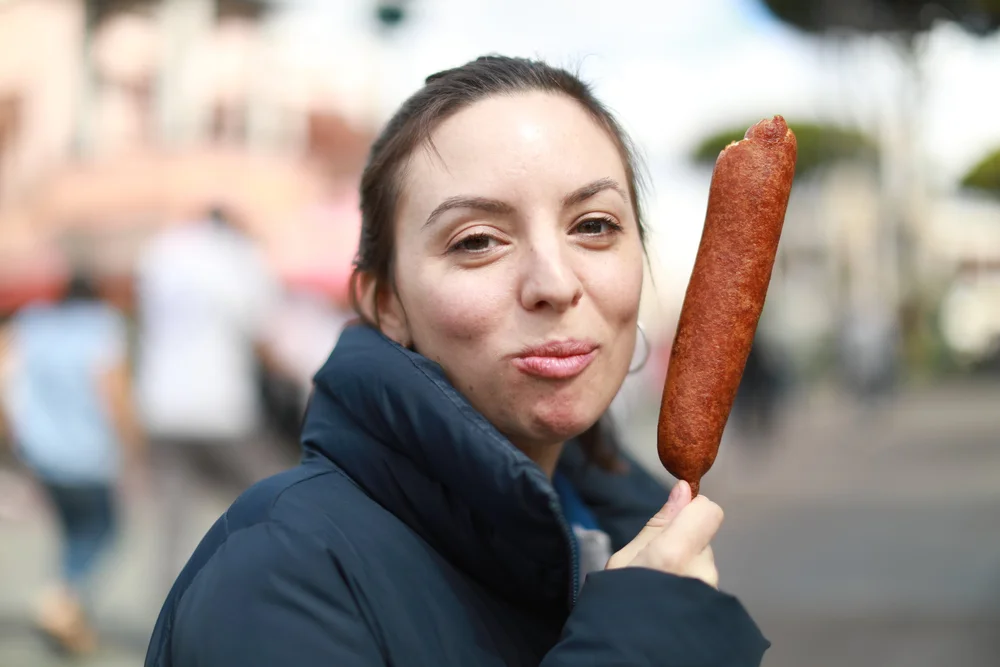
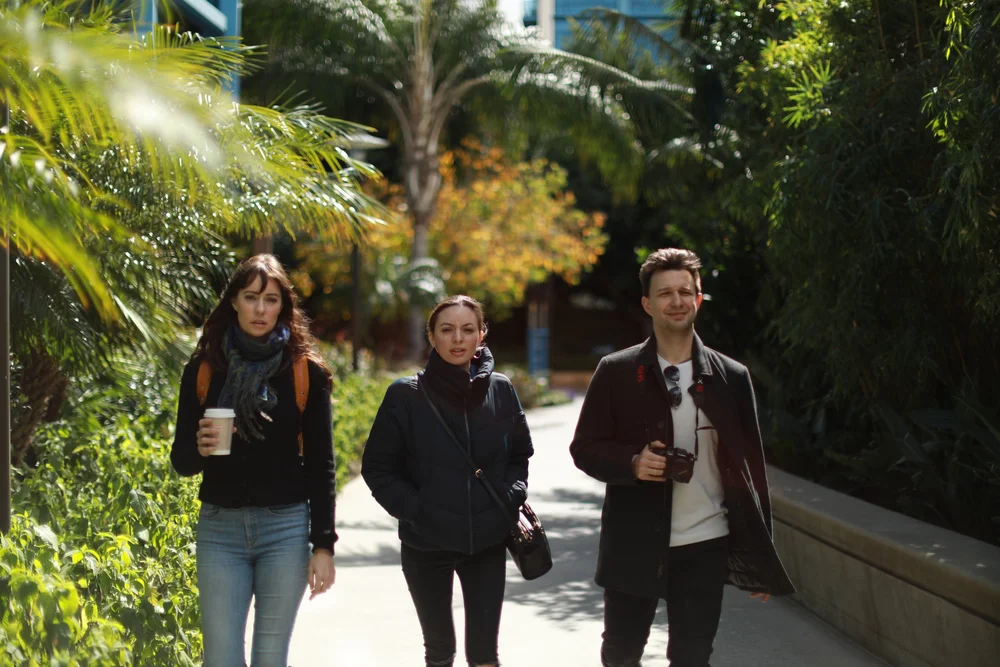
The central problem with shooting Am I See You? inside Disneyland was that they were not actually supposed to be shooting Am I See You? inside Disneyland. Anything resembling a conventional film set would attract attention, so the production had to disappear into the thousands of ordinary guests carrying cameras through the park.
Daryl would travel light with the GH5, the actors would behave like friends having a day at Disneyland, and nobody would yell “Action” or “Cut.” If someone missed a line, they did not immediately reset for another take. The actors would keep moving, circle back naturally, and find their way into the scene again.
For Tara Erickson, who was accustomed to more traditionally organized professional sets, the system took some adjustment. Daryl and Sasha Boggs were considerably more comfortable with filmmaking by controlled chaos and found Tara’s initial unease with the process fairly amusing.
Sasha eventually supplied the solution.
“Corndog.”
If somebody casually asked whether anyone wanted a corndog, that meant the camera was rolling and the scene was beginning. It sounded innocent enough to anybody nearby and gave the actors a cue without announcing to the entire park that a movie was being made. Before long, “corndog” was being used for almost everything.
The trip itself began with Daryl and Becker Von Felsburg driving overnight from the Bay Area to Anaheim. Somewhere along the way, the conversation turned to Sherman, the obsessive pin collector Becker would be playing. By the time they arrived, Becker had settled on a voice inspired by Rip Taylor, loud, theatrical, and immediately exhausting to maintain.
He regretted the decision almost as soon as he started using it.
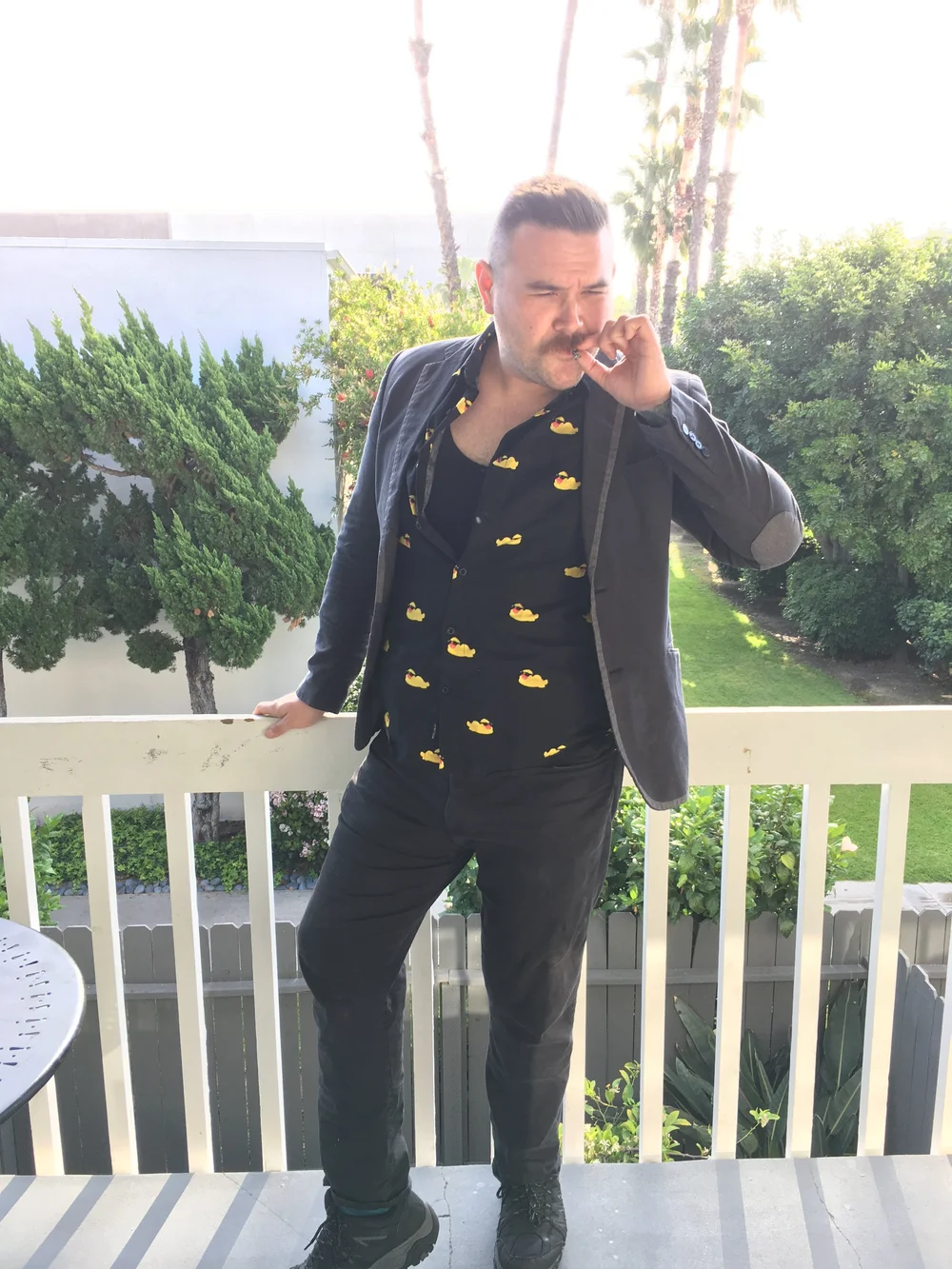
The next morning, Daryl and Becker worked through scenes in the courtyard of the Anaheim Hotel, figuring out movement and dialogue before attempting any of it inside the park. Tara and Sasha joined them soon after. Michael Martin, maintaining a longstanding relationship with the concept of lateness, eventually arrived as well.
The male characters were given mustaches as a small visual nod to Walt Disney, a choice that carried over into both major phases of production. Tara and Sasha worked through their costumes at the hotel, including the important question of whether Sasha should tuck in her shirt. Sasha joked that this was finally putting her expensive acting-school education to use.
“You look like you’re on spring break,” Tara told her.
Sherman required considerably more preparation. His denim jacket had to look as though it belonged to someone who had allowed Disney pin trading to consume every available inch of his personality.
The group spent much of a day in the hotel room attaching more than 400 pins to it, building up layer after layer until Becker looked less like a casual collector than a walking display case. The assortment ranged across years of Disney merchandise, characters, oddities, and whatever else they could get their hands on.
By the time Becker put the finished jacket on and launched into the Rip Taylor voice, Sherman more or less existed.
“I hate this voice,” Becker complained.
Unfortunately for him, everybody else liked it.
Once the costumes were assembled, the group headed into Disneyland to block scenes and find out whether the actual production plan would work.
Night presented its own problem. Much of the story would take place after dark, and the GH5 needed to produce an image that looked deliberate without the benefit of conventional movie lighting. Daryl tested exposure and lenses throughout the park while the actors rehearsed their movements among real guests, learning where they could stop, where they had to keep moving, and which locations offered enough existing light to photograph properly.
The rehearsal also confirmed one of the great advantages of the entire scheme.
They were still at Disneyland.
Between working through scenes, the group rode Big Thunder Mountain Railroad, ate their way through the park, and eventually ended up at Trader Sam’s Enchanted Tiki Bar. At one point Sasha attacked an enormous turkey leg while Daryl filmed her, producing an impromptu piece of promotional footage.
“Mixing a short film shoot with a Disneyland vacation has to be the best idea we’ve ever had.”
After months of planning, the first real day of production began inside Disneyland. The group arrived early, hoping to use the quieter morning hours before the park filled in around them. Main Street U.S.A. became the first major location, with Tara Erickson and Sasha Boggs working through the opening material while Daryl moved around them with the GH5.
For Daryl, Main Street was almost absurdly useful. The buildings, storefronts, pavement, extras, color, and depth were already there. Very little had to be invented. As long as the crew could stay unobtrusive, Disneyland was essentially providing them with one of the most elaborate standing sets they had ever used.
Michael Martin spent part of the morning fooling around with a ragtime piano nearby, irritating both strangers and members of the production in roughly equal measure. From there, the day became increasingly mobile.
The script called for Whitney and Alana to spend a full day inside the park, so much of the material could be gathered by simply following the actors through actual attractions. The crew filmed on and around the Matterhorn Bobsleds, Mad Tea Party, Indiana Jones Adventure, and elsewhere throughout the park, using the rides less as spectacle than as pieces of the girls’ day together.
Splash Mountain proved less cooperative. The group rode it three times in succession to gather enough angles. Becker, repeatedly seated toward the front, was thoroughly soaked by the end. Daryl tried to turn around during one of the rides to shoot backward and was promptly reprimanded over the attraction’s loudspeaker. The shot was apparently worth the trouble.
One of the more important locations was considerably less dramatic.
Whitney’s family history in the film was tied to an old photograph taken beside Disneyland’s cigar store Indian, a figure that had remained on Main Street through decades of changes around it. That permanence made it useful for a story about memory. The park could change, generations could come and go, but the same object could still be standing in the background of a family photograph years later.
There was also a practical advantage. Disneyland had two of them. If Main Street became impossible to shoot, another cigar store Indian stood in Frontierland and could serve the same basic purpose. For a production with little control over its primary location, having a built-in duplicate was unusually comforting.
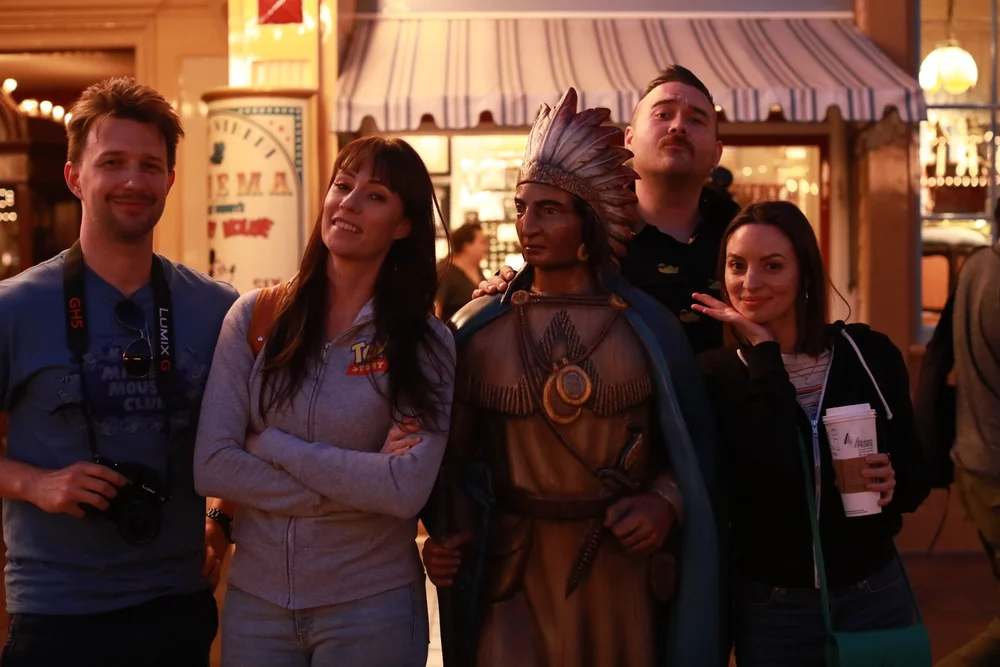
The second day was less about complete scenes and more about filling gaps. The crew returned to Main Street for pickups, then began collecting additional attraction footage to expand the Disneyland montage. Daryl made heavier use of the GH5’s slow-motion capabilities, revisiting locations such as the Mad Tea Party and Big Thunder Mountain to give the sequence more variety than they had managed on the first day.
They also filmed aboard it’s a small world. Daryl had no patience for the usual complaints about the song. He liked the attraction precisely because of its simplicity, its optimism, and the fact that it had survived for generations without needing to apologize for either.
It was also air-conditioned.
Another returning attraction was Corn Dog Wolverine.
The joke had started on an earlier family trip for Henry’s second birthday, when Becker discovered that Disneyland’s oversized corn dogs could be wedged between his fingers like Wolverine claws. He committed to the impression despite the fact that the freshly cooked corn dogs were hot enough to burn both his hands and his mouth.
During the Am I See You? shoot, Becker recreated the bit for the camera, once again holding three corn dogs between his fingers and performing as a considerably less threatening version of Wolverine.
There was no narrative reason for any of this. It made the movie anyway.
By the end of the second Disneyland day, Phase One was finished. As the crew checked off the last of the park material, Becker’s 400-pin jacket began attracting exactly the kind of attention it had been designed to imitate. Real pin traders stopped to look it over, compare pieces, and ask questions, apparently accepting Sherman’s costume as the work of one of their own. For a production that had spent two days trying not to attract attention, it was an appropriately strange way to finish.
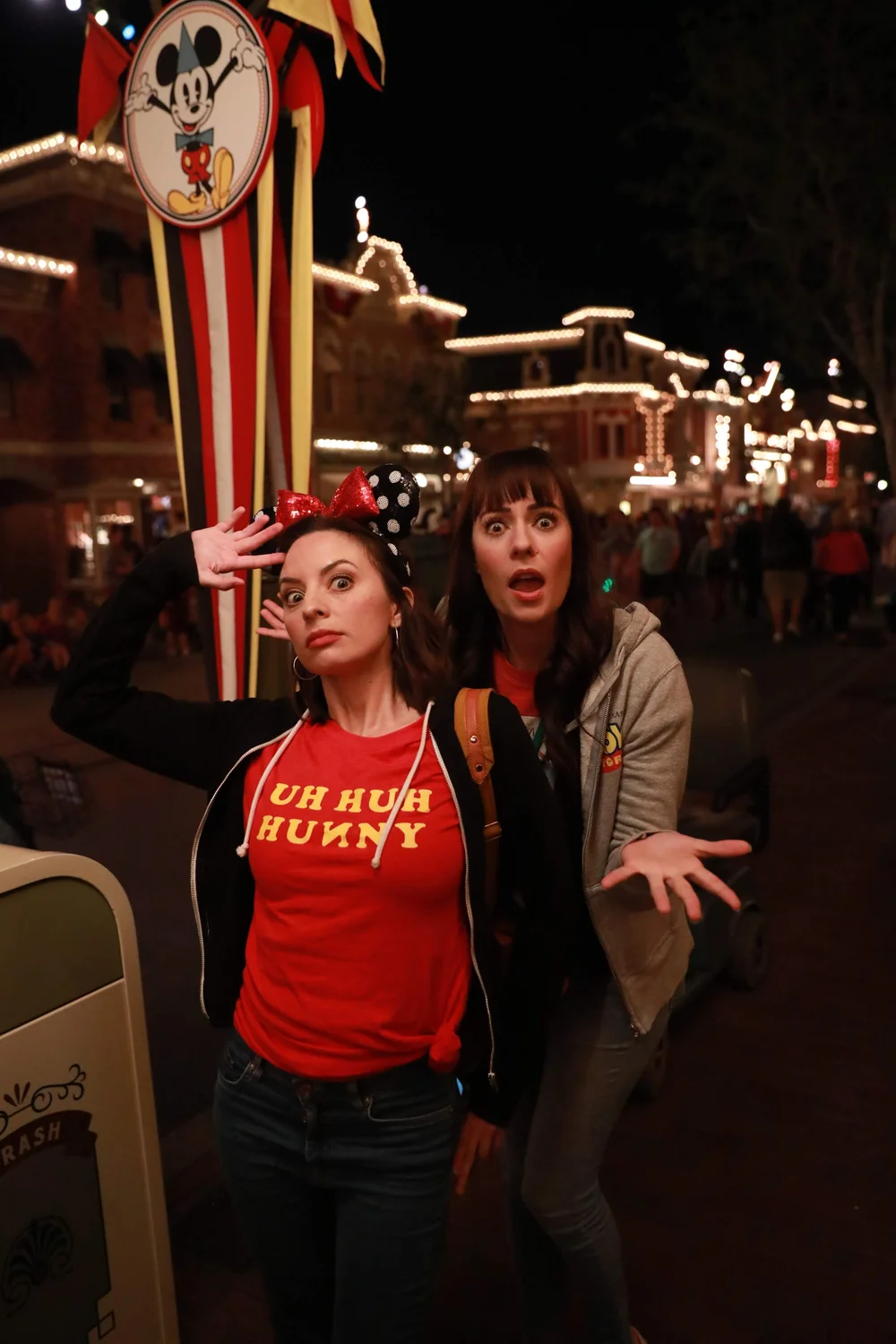
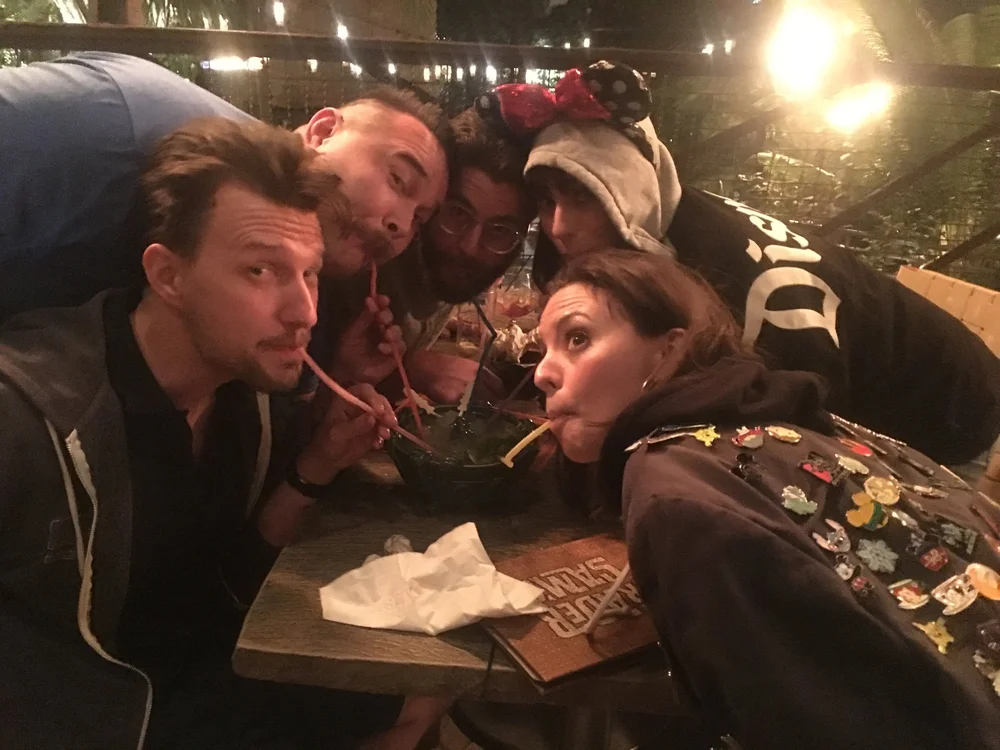
Once the cameras were put away, the group turned the rest of the evening into an unofficial wrap party. Daryl and Tara Erickson, the only annual passholders in the group, slipped over to California Adventure first and established an early lead at the bar before everyone reconvened at Trader Sam’s Enchanted Tiki Bar. By then, exhaustion had given way to the usual Dollars & Donuts combination of relief, drinking, and increasingly poor judgment.
The celebration continued into the ride back from the park. Daryl and Sasha Boggs ended up together in the back seat of a cab, where Sasha produced a kazoo for reasons nobody seems to have questioned at the time. The ride deteriorated into an improvised musical performance while Tara attempted to eat some of her pins.
Phase One was complete. The harder part was still ahead.
Back home, Daryl immediately began cutting the behind-the-scenes material that would help launch the Kickstarter campaign. The campaign went live on May 19, 2019, with a goal of $10,000. Two days later, it was funded. The reason was Ted Nyman.
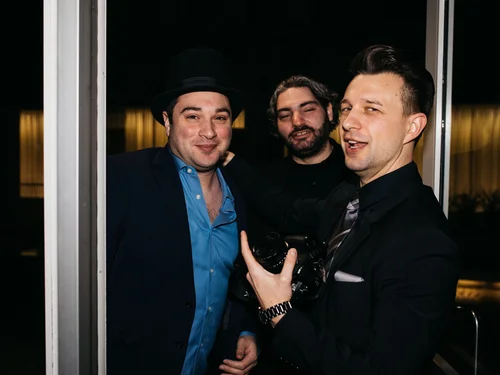
Ted, a friend of the group and longtime supporter, pledged the full $10,000 himself in exchange for the Executive Producer position. The contribution stunned everybody involved and instantly changed the scale of the campaign. It also changed the title. In recognition of the pledge, the film became Ted Nyman Presents: Am I See You?, complete with a custom opening card modeled after the old Buena Vista presentation logos that had introduced generations of Disney films. The gesture was both sincere and exactly theatrical enough to suit the movie.
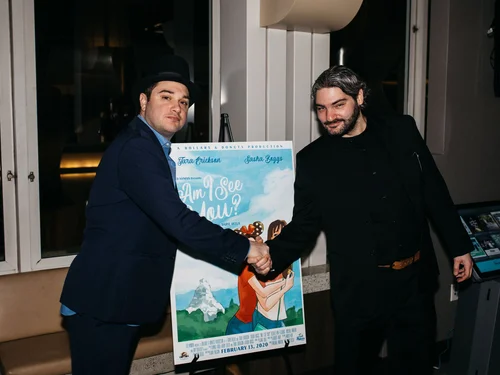
Ted’s contribution did more than guarantee that the film would happen. Because the Kickstarter goal had already been met almost immediately, every additional pledge could go toward expanding what Phase Two might look like. The campaign ultimately reached $17,176. For Dollars & Donuts, that was an extraordinary amount of money to suddenly have attached to a short film.
The additional funding allowed the production to move well beyond the stripped-down guerrilla approach of Disneyland. Phase Two could be treated as a controlled, fully equipped production, and Daryl decided to make the visual difference obvious. The centerpiece was a RED Monstro, a large-format cinema camera far beyond anything the company would normally have rented for a short. The contrast was part of the appeal. The Disneyland material had been captured quickly and discreetly on the GH5, with almost no footprint. The cult material could now be photographed with a massive cinema camera under controlled lighting, giving the second half of the film a more heightened, theatrical look. The project had started with a five-second accidental clip. Now it was shooting on a RED Monstro.
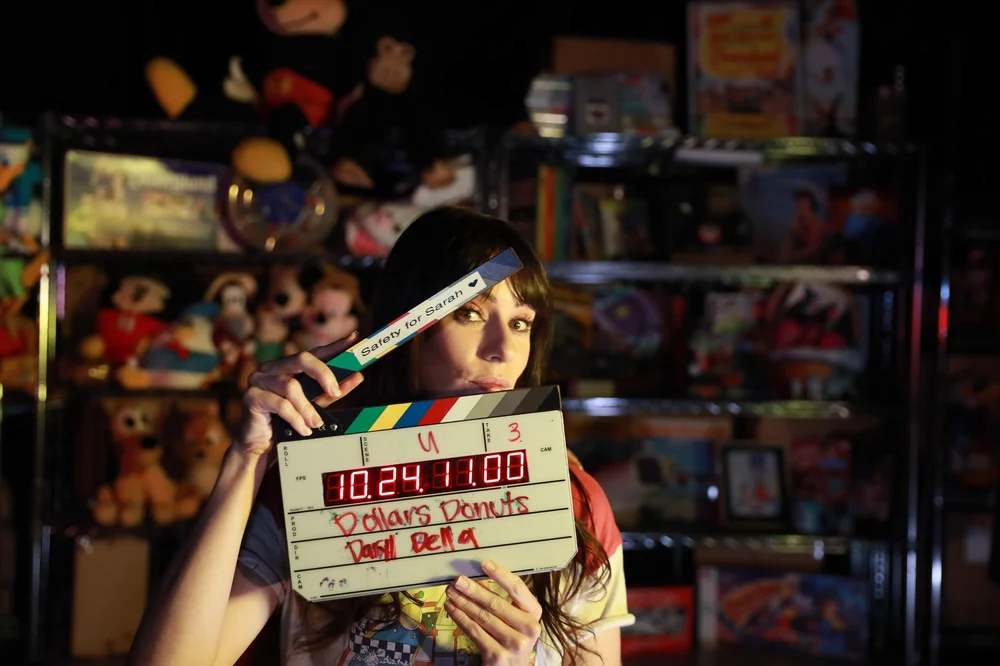
Phase Two moved the production out of Disneyland and into something much more controlled. The crew rented a warehouse in Oakland and turned it into the cult’s lair, a space that could finally be lit, dressed, and manipulated without worrying about security guards or tourists wandering into frame. If Phase One had depended on disappearing into Disneyland, Phase Two could do the opposite and build an entire world from scratch.
The set was designed as a shrine to Disney obsession, filled with objects that mixed real family history, vintage Disneyana, and deliberately excessive collector clutter. Some of the pieces came from Daryl’s own childhood, including a porcelain Goofy figurine his Aunt Vicky had given him years earlier. Others were chosen because they carried some strange personal connection to the company’s history, including a replica of Disneyland’s original “D” sign inspired by Daryl and Ray’s encounter with John Stamos’s house during an earlier Los Angeles trip.
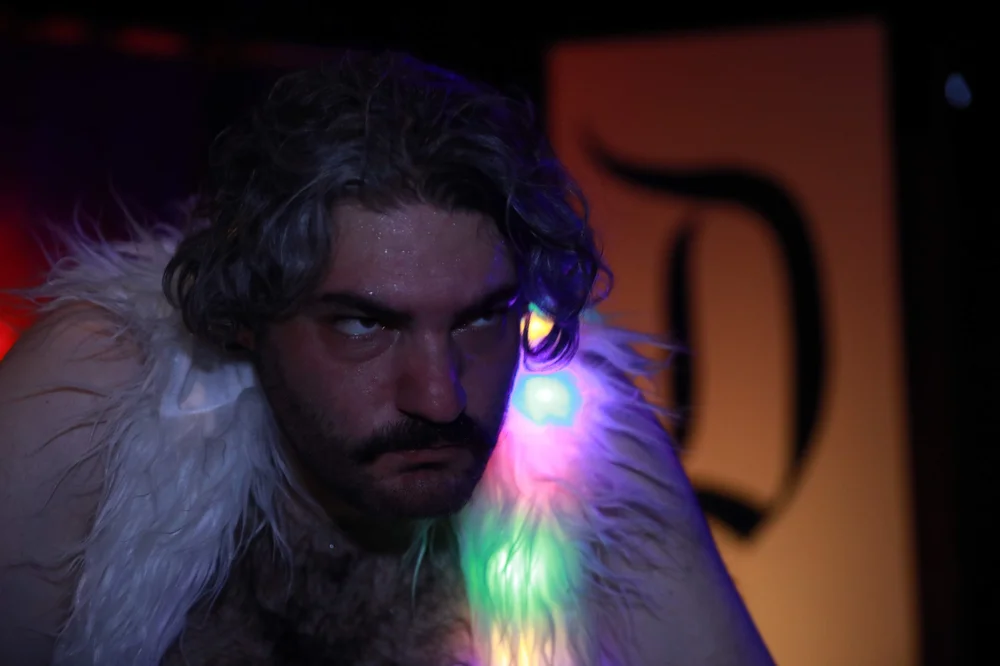
The room also included a Big Al doll from Country Bear Jamboree, paired with Tex Ritter’s recording of “Blood on the Saddle,” mouse ears signed by Annette Funicello, a vintage Ludwig Von Drake doll, and a 3D-printed Nautilus from 20,000 Leagues Under the Sea made by Brian Grima. None of it was there merely as decoration. The whole room was supposed to feel like years of nostalgia, collecting, private obsession, and Disney history had been compressed into one increasingly unhealthy space.
At the center of the story was the fictional Smoke Tree Ranch tie pin, reimagined as an object Whitney’s mother had once received from Walt Disney himself.
The cult saw it as a priceless artifact. Whitney saw something else.
The ensemble expanded considerably for Phase Two. Ray Revello became the Maestro, the flamboyant leader of the cult and the person most responsible for turning the group’s Disney fixation into something theatrical and dangerous. Michael Martin returned to acting as Maddox, while Mitchell Martin joined him as Braddox. The brothers were dressed alike, borrowing from the clean-cut symmetry of Dick Van Dyke’s costumes in Mary Poppins and turning it into something much less reassuring. Lorenzo Ocon played Mopey, a warped cousin to Dopey. Gino Vigil became Gooby, a sinister ringmaster figure built around a grotesque Goofy muzzle found on Etsy. Recording artist Maisy Kay, a Disney fan and Kickstarter supporter, joined as Alish, a loose reworking of Alice in Wonderland. The rest of the cult was filled out with friends and recurring collaborators, giving the warehouse sequence the kind of crowded, eccentric ensemble the film needed.
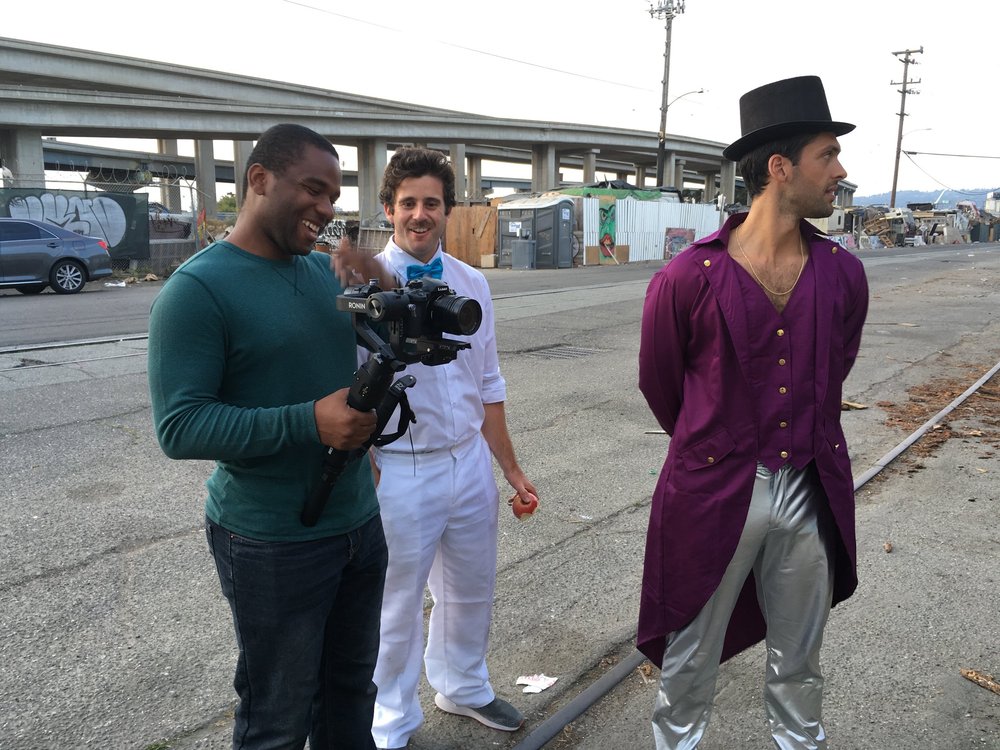
By the time Phase Two was coming together, Daryl had decided that a Disney tribute without original songs would feel incomplete. He brought in songwriter Robert Ruby to write two pieces for the film. The Maestro’s entrance became a theatrical villain number, built around the kind of talk-singing and grandiose presentation associated with 1990s Disney animation. Whitney’s emotional arc, meanwhile, was given its own musical payoff in the form of an indie-style power ballad.
Daryl and Michael returned to Los Angeles for the recording sessions, where Tara Erickson, Sasha Boggs, and Gino Vigil recorded their vocal material. Ray’s Maestro number became one of the central set pieces of Phase Two, giving him a chance to play the cult leader as both threatening and absurdly pleased with himself.
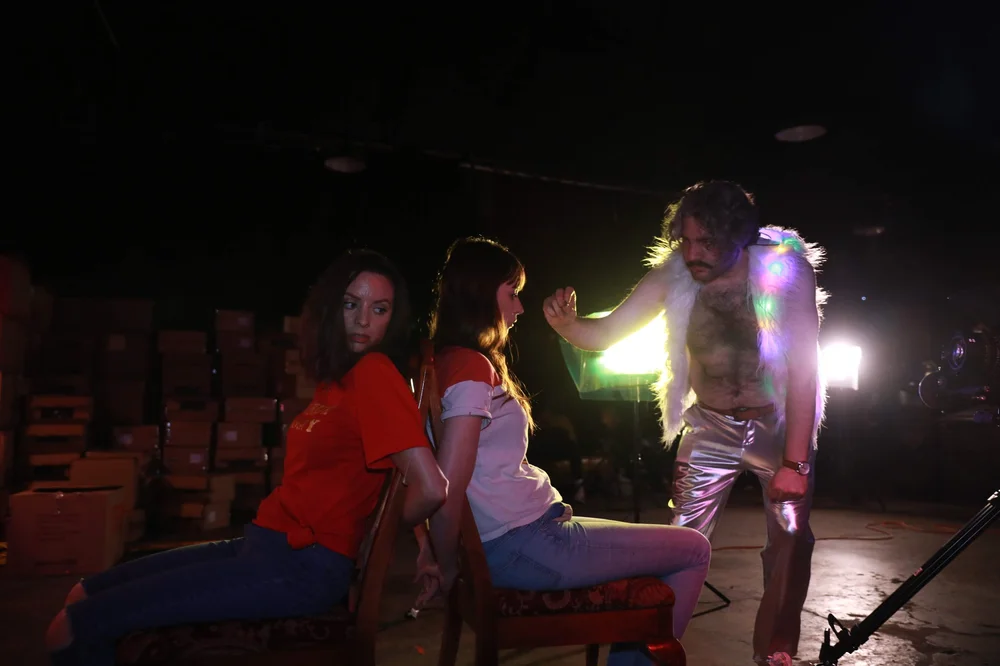
Music had already been threaded through the script in smaller ways. Sherman and Alana connect by singing pieces of A Whole New World, and later Whitney deliberately weaponizes familiar Disney songs against the cult. The idea was simple. The Maestro wanted to control the room. Whitney discovers that the easiest way to get under his skin is to steal the show. By baiting Sherman into joining her and Alana in song, she turns the cult’s own obsession against its leader. The joke escalates until the Maestro loses control and the scene erupts into violence. The whole sequence owed something to the anarchic logic of Who Framed Roger Rabbit?, where songs, jokes, and cartoon logic can become actual tools inside the story rather than merely decoration.
Maisy Kay’s involvement produced one more piece of music that had not been part of the original plan. After joining the cast, she offered to write and perform an additional song for the film. Daryl suggested something in the emotional territory of Candle on the Water from Pete’s Dragon and Someone’s Waiting for You from The Rescuers, two songs his mother had sung to him when he was young.
Maisy returned with “Bittersweet.” The song became the opening of the film. Daryl paired it with old Super 8 footage shot by his grandfather in the early 1960s, including footage of his father as a child at Disneyland.
Then the footage offered up one of those coincidences that no production could have planned. In the background was little Hank with his older sister Linda and mom Dorothy running past that same cigar store Indian that had become central to Whitney’s story. A prop chosen because it had remained in the park for decades was suddenly present in Daryl’s own family footage from childhood generations earlier. The film’s themes of memory, inheritance, and objects surviving long enough to connect different lives had effectively appeared in the archive on their own.
The script continued changing as production opened up new possibilities. One addition came from another piece of Daryl’s family history. A pocketknife his father had carried at Disneyland as a child was incorporated into Alana’s storyline and eventually became part of Whitney and Alana’s escape.
The collectible-shop sequence also shifted locations. It had originally been conceived around Anaheim, but the production ultimately moved it to Coastside Comics in Pacifica, a local store with the right density of objects and shelves to sell the idea without requiring much transformation. Daryl and Kirsten built additional props for the scene, including a replica of Uncle Scrooge’s Number One Dime. Even the price tags carried family history. Some were handwritten by Daryl’s grandmother, giving a fictional collector’s shop tiny traces of the actual people the movie was already drawing from.
The most deliberate visual change came with the transition into the cult’s lair. Phase One had been framed in a narrower 2.35:1 image, reflecting the compact guerrilla approach used inside Disneyland. When Whitney and Alana are kidnapped and the sacks are pulled from their heads, the frame opens up. The aspect ratio expands to 16:9, revealing the larger field of view available from the RED Monstro’s full-frame sensor. The change was designed to make the cult’s world feel physically larger and stranger than the one the women had just left.
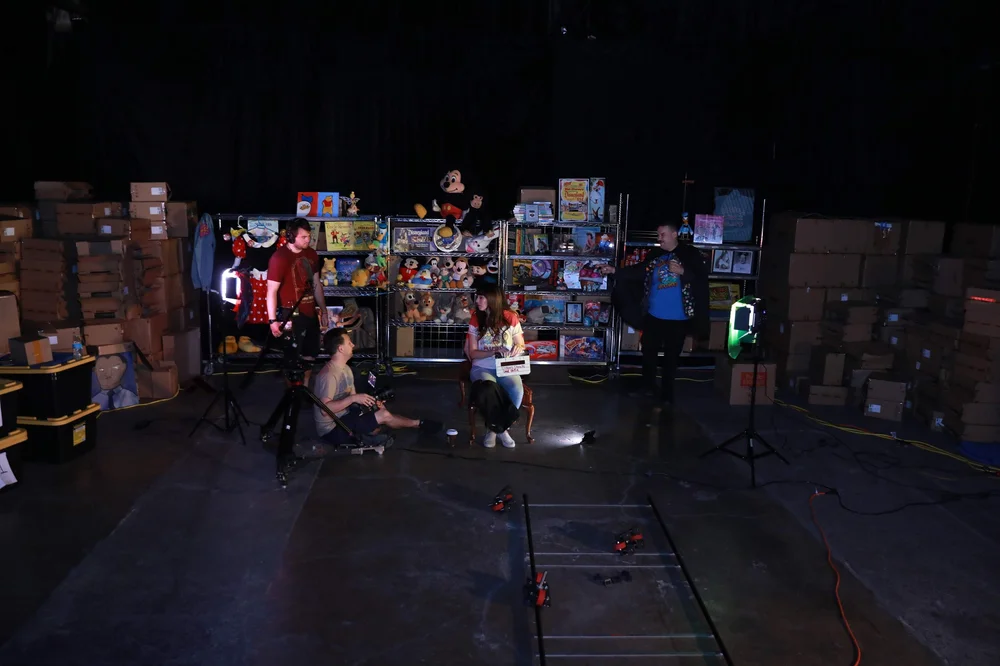
The warehouse gave the production control, but it also introduced problems that Disneyland never had. The largest was lighting. Daryl wanted the Maestro’s musical number to feel like a live stage performance, with theatrical lighting changing around Ray as the sequence built. Hiring a conventional film lighting crew capable of creating the effect was beyond the production’s budget, while the stage-lighting options they explored were expensive and not particularly well suited to being photographed.
So they bought the lights themselves. The crew assembled and operated a makeshift stage-lighting system inside the warehouse, trading some technical polish for the ability to attempt the sequence at all. Daryl was never entirely satisfied with the results, but the solution allowed them to preserve the larger idea rather than abandoning it because the professional version was unaffordable. Sound went in the opposite direction. The production brought in professional sound mixers Steven Lagosh and Brian Baker for the warehouse material. This time, the dialogue was going to exist when they recorded it.
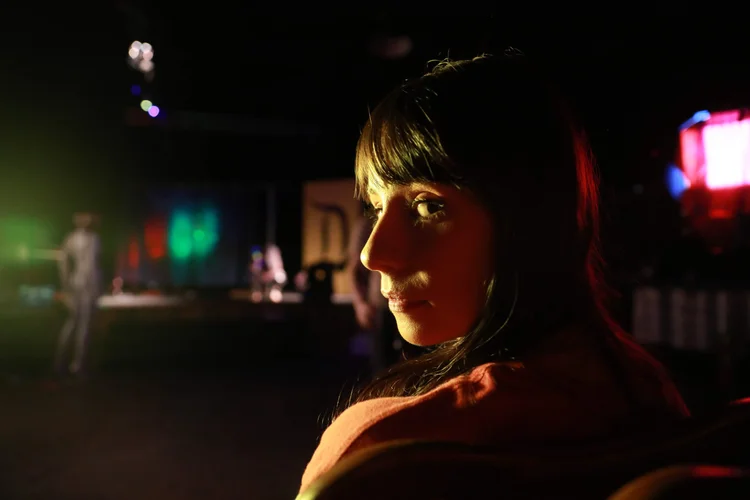
Phase Two was considerably more elaborate than the Disneyland shoot. The crew had to build and dress the warehouse, manage a much larger ensemble, coordinate costumes and makeup, photograph musical sequences, handle the RED Monstro, and keep track of an extraordinary amount of Disney memorabilia and homemade production design. It was an unusual reversal of the normal filmmaking problem. At Disneyland, the world was already there and Dollars & Donuts had to find a way to photograph it. In Oakland, they had an empty room and had to build the world themselves.
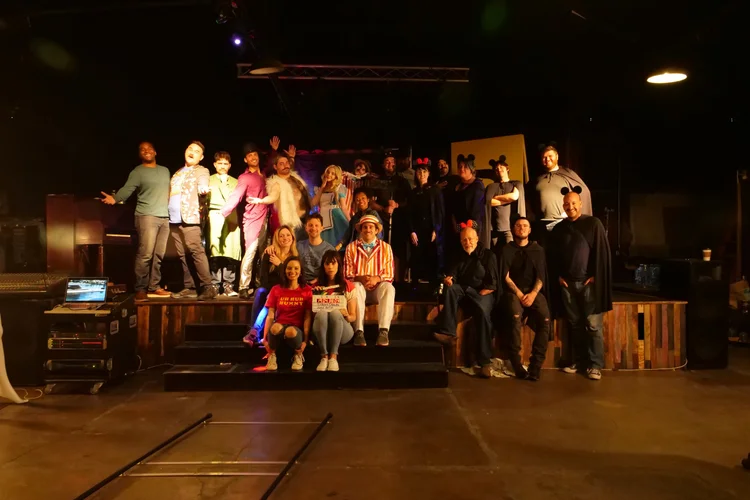
By the time Phase Two was finished, Daryl was already looking ahead to a deadline that had nothing to do with the premiere. His father, Hank Della, was scheduled for a dangerous surgery almost immediately after Daryl returned from Los Angeles. Daryl understood that if the surgery went badly, finishing Am I See You? might become impossible for a while. Whatever remained unfinished would simply have to wait until he had the time, attention, or emotional capacity to return to it. That knowledge gave the Disneyland ADR an urgency it otherwise would not have had. Daryl wanted every major piece of the film recorded and safely in hand before he went home.
The Disneyland footage had always been expected to require extensive dialogue replacement. Crowds, music, ride noise, and the constant activity of the park had made clean production sound nearly impossible, and Tara Erickson had argued during the shoot that discreet lavalier microphones would have saved them considerable trouble later. In retrospect, Daryl agreed.
Tara and Sasha Boggs returned to Bedrock LA to rebuild the park dialogue, matching months-old performances line by line inside the recording booth. The session also gave Daryl an opportunity to simplify Whitney’s emotional backstory, reducing the references to both her mother and grandmother and concentrating the story more directly on the loss of her mother. Sasha later described the ADR process as “the stuff of nightmares.” Daryl was simply relieved to have it done.
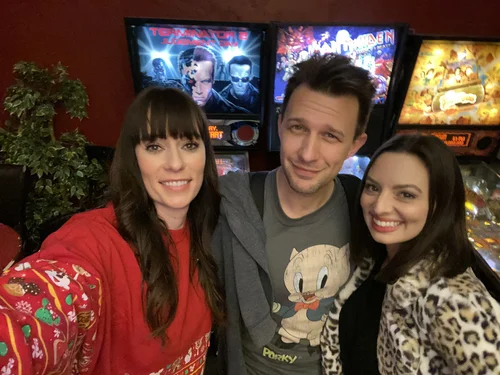
Afterward, Daryl, Tara, and Sasha went to 4400 Bar in Silver Lake. Tara left first, while Daryl and Sasha stayed behind talking late into the night. What began as a chance to decompress after post-production gradually became something more consequential, with conversations and ideas that would matter well beyond Am I See You?
Within days, everything changed.
From its earliest conception, Am I See You? had been intended as a film for Daryl’s mother. Nina Della’s love of Disneyland and pin trading had provided the starting point for the story. Family photographs became props. Objects with connections to Daryl’s childhood found their way into the sets. Even the old Super 8 footage carried generations of the family through Disneyland before Daryl was old enough to remember any of it.
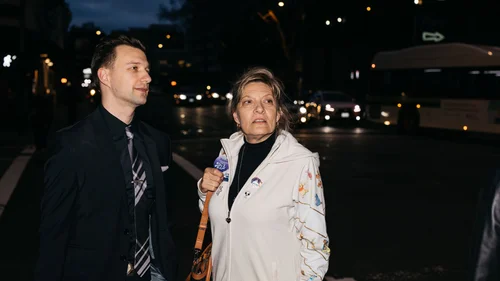
It was unusual territory. For years, Hank Della had been the parent most visibly entangled with Dollars & Donuts. He wrote scripts, acted, attended premieres, argued about movies, and became part of the mythology surrounding the company almost by default. Daryl and Hank shared filmmaking as a language. Am I See You? was supposed to give Nina one.
Then on November 29, 2019, while the film was still in post-production, Hank Della passed away. The planned December premiere was immediately abandoned. There was no meaningful way to finish the movie on the original schedule, and for a while there was little interest in trying. When Daryl eventually returned to the film in the new year, he was looking at material that had acquired a meaning nobody involved could have anticipated when it was shot.
Hank was already everywhere. The opening Super 8 footage included him as a little boy at Disneyland. Some of the objects incorporated into the film had belonged to him or came from his childhood. Photographs used to represent Whitney’s dead mother were actually photographs of Nina as a young woman, taken by Hank. A movie about somebody trying to understand a dead parent through photographs, possessions, and memories was suddenly being finished by someone doing exactly that.
The film didn’t need to be rewritten to acknowledge what had happened. It had already done it.
Daryl added a new dedication to the end credits using more of the family’s Super 8 footage. This time the images were of Nina as a teenager, filmed by Hank when they were young. The choice completed a circle that had not existed when production began. Hank was behind the camera. Nina was in front of it. Decades later, their son was using the footage in a movie originally conceived as a tribute to his mother and completed in mourning for his father.
That gave the film a different emotional weight for Daryl. Whitney spends the story believing that understanding one object might somehow restore something she failed to appreciate while she still had the chance. What she eventually discovers is that the object was never the memory itself. By the time Daryl finished the movie, that idea required very little imagination.
The premiere was rescheduled for February 13, 2020, at the Embarcadero Center Cinema in San Francisco. Daryl took the stage with Michael Martin, Ray Revello, Becker Von Felsburg, Mitchell Martin, Tara Erickson, and Sasha Boggs. It was the first Dollars & Donuts premiere without Hank.
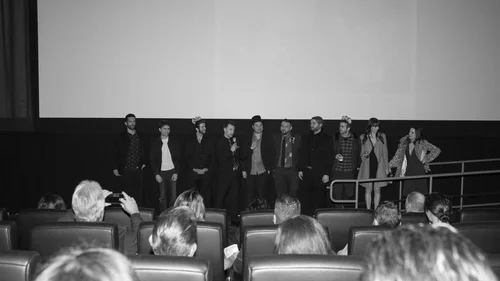
Daryl had originally expected to introduce Am I See You? as the movie he had finally made specifically for his mother. Standing in front of the audience, he admitted that things had not quite gone according to plan:
“We’ve been making movies together for a long time, and every movie we’ve made until now, I was really directing for my dad. And tonight was the first time I was ever making something specifically for my mom. It includes a lot of the things she loves, it is inspired by her hobbies, and was really meant as a love letter to her and what she means to me, and really, to all our moms and what they mean to us.
And then my dad went and found a way to make the entire night about him anyway.
So, sorry Mom. You almost got one.
But this one’s for Dad too.”
That was ultimately what Am I See You? became. It started with an accidental five-second video at Disneyland and an idea for a movie about obsessive pin collectors. Somewhere along the way it absorbed childhood photographs, family vacations, objects passed between generations, songs Nina had sung to Daryl as a child, footage his grandfather had taken of Hank, footage Hank had taken of Nina, and finally the experience of losing the person who had been standing beside Dollars & Donuts since its beginning.
The movie had been conceived as a tribute to one parent. By the time it reached the screen, it belonged to both.