

After a long break, Rich and Lozo return with an Elvis dance-off, an ill-advised hospital story, a condom disappearing up Lozo’s nose, and enough bad judgment to make the hiatus feel completely pointless.
For the first time, the series also leaves El Camino High, following them to a local hookah lounge where the usual insults briefly give way to something almost resembling nostalgia.
By the fifth film, the joke had changed a little. Rich and Lozo were still capable of turning any afternoon into nonsense, but now there was enough history behind them to recognize the routine while they were doing it. Naturally, they close things out by mangling Suspicious Minds.
RAY REVELLO
Canon EOS 600D - Rebel T3i
Society Restaurant & Hookah Lounge, Burlingame, CA
South San Francisco, CA
Performed by Richard Castromayor & Lorenzo Ocon
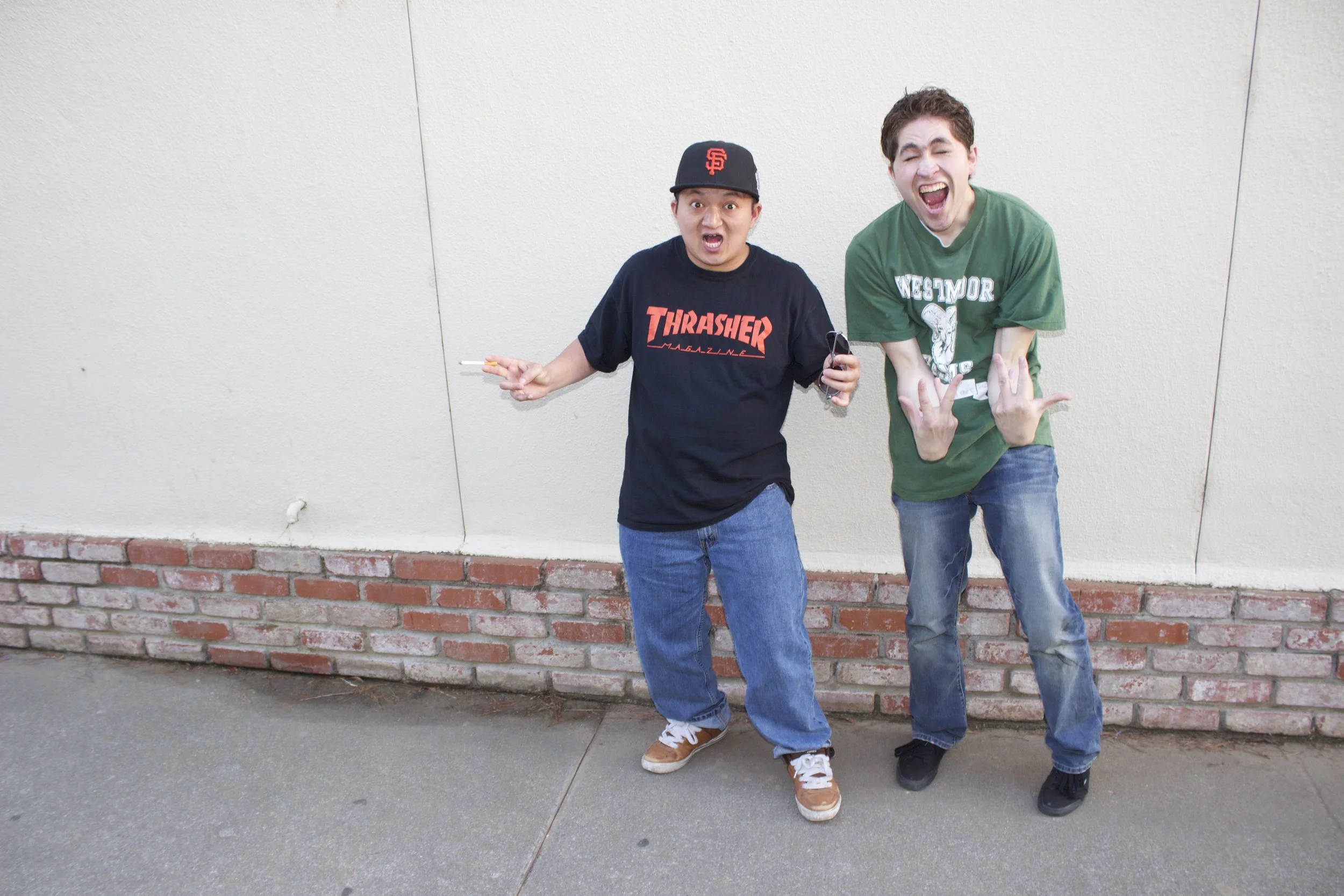
Behind the Scenes
By 2013, Rich & Lozo had become something unusual in the Dollars & Donuts catalog: the only surviving franchise from the company’s original era. When Daryl rebuilt Dollars & Donuts in 2011, the idea had initially been to draw a fairly hard line between what came before and what came next. That boundary did not stay hard for very long.
Rich & Lozo 5 was one of the first signs that the old world was beginning to seep back through. The reboot was becoming less of a gate and more of a permeable membrane, allowing pieces of the earlier Dollars & Donuts identity to re-enter when they still felt useful, funny, or alive. Rich Castromayor and Lorenzo Ocon certainly qualified.
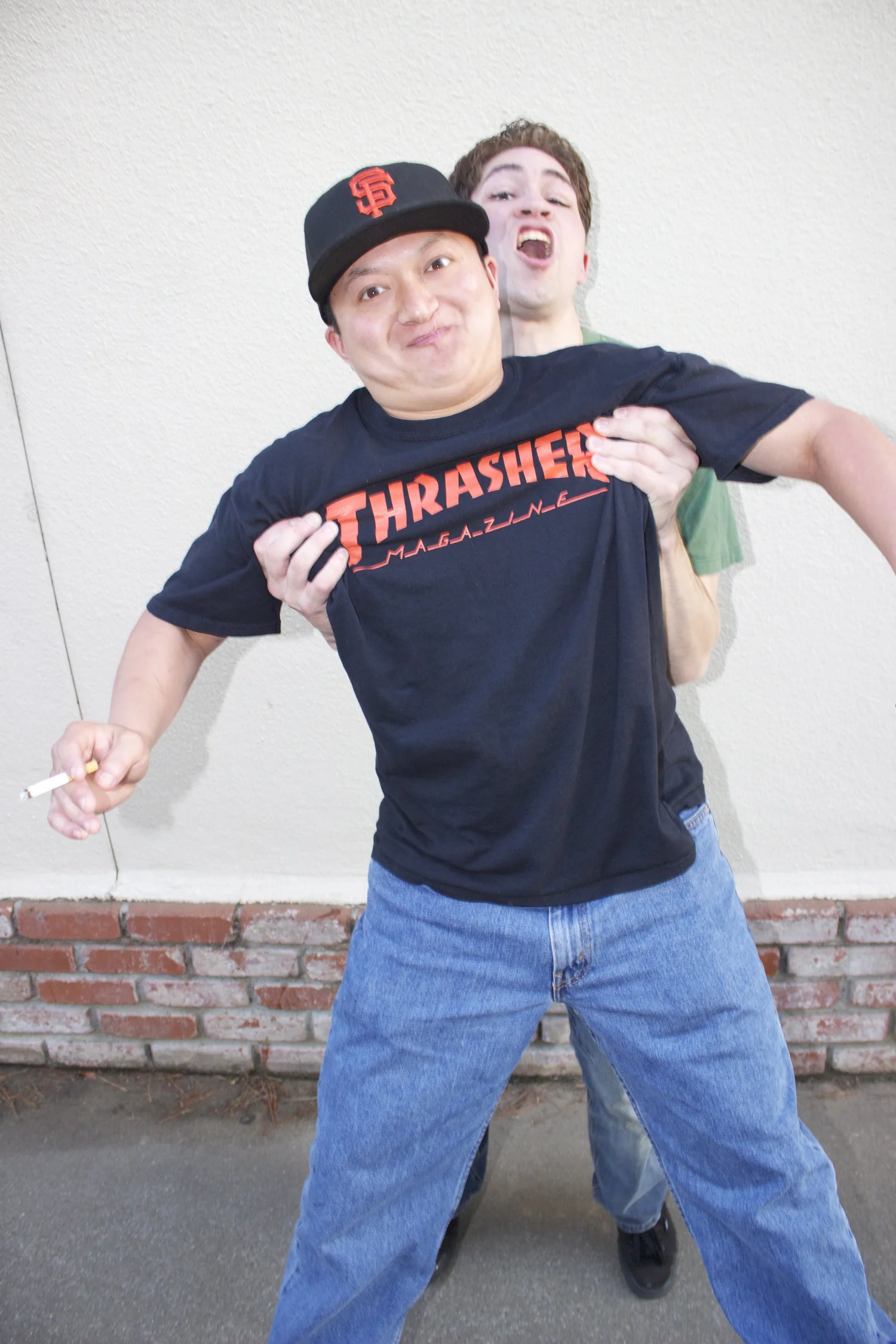
The timing also felt right. Daryl had recently been buried in increasingly structured productions, longer scripts, bigger crews, and the growing infrastructure surrounding films like Dead Right II. Rich & Lozo 5 offered an escape from all of that. There was no screenplay to protect, no elaborate production machine to manage, and very little interest in behaving like responsible filmmakers. There was simply Rich, Lozo, Ray Revello, two cameras, and an afternoon to waste.
Appropriately, it became Dollars & Donuts production number 050.
Technically, however, this was not the same Rich & Lozo Daryl had been making in the halls of El Camino High School years earlier. It was the first installment photographed on DSLRs, using Daryl’s Canon Rebel T2i alongside a T3i borrowed from Mitchell Martin. It was also the first time the series used a two-camera setup, with Ray operating the second camera.
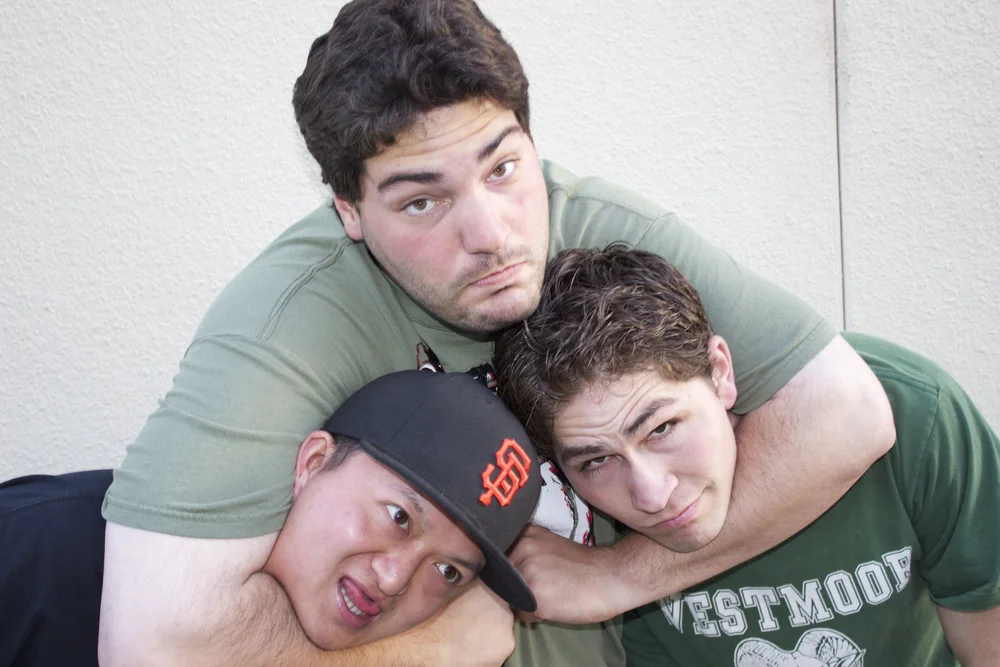
The difference was immediate. Instead of constantly trying to anticipate which half of a conversation might become funny, Daryl could let Rich and Lozo ramble while both sides were covered. The extra angle made the edit faster, looser, and much more playful. A shotgun microphone mounted to the T2i also provided cleaner sound than the earlier films had ever enjoyed.
For Daryl, the project became an exercise in editing refinement. The material itself remained deliberately crude and spontaneous, but the presentation could now be much more deliberate. Influences like Arrested Development began sneaking into the rhythm, particularly the sarcastic use of abrupt cutaways, photographic evidence, callbacks, and visual punchlines that contradicted or embellished whatever Rich and Lozo happened to be saying.
Ray came up with the Elvis theme, which gave the fifth film a loose motif before anybody had really decided what the movie was going to be. Daryl remembers the aviator glasses Rich wears as probably belonging to Ray, another little piece of borrowed nonsense that became part of the day.
The film opens with Rich and Lozo immediately re-establishing the old rhythm, talking over each other, insulting one another, and then deciding an Elvis dance-off is apparently the proper way to mark their return.

That sequence also showed how much more control Daryl now had in the edit. With two cameras running, the competition could unfold naturally while the cuts supplied the rhythm, turning what was essentially two old friends fooling around in a schoolyard into something that felt far more deliberately assembled than the earlier installments ever had.
One of the best examples of the new editing language arrives when Lorenzo casually explains that he had recently been in a coma, or at least believed he had been, and begins describing waking up in a hospital surrounded by tubes, an IV, and medical equipment. The film immediately produces photographic evidence.
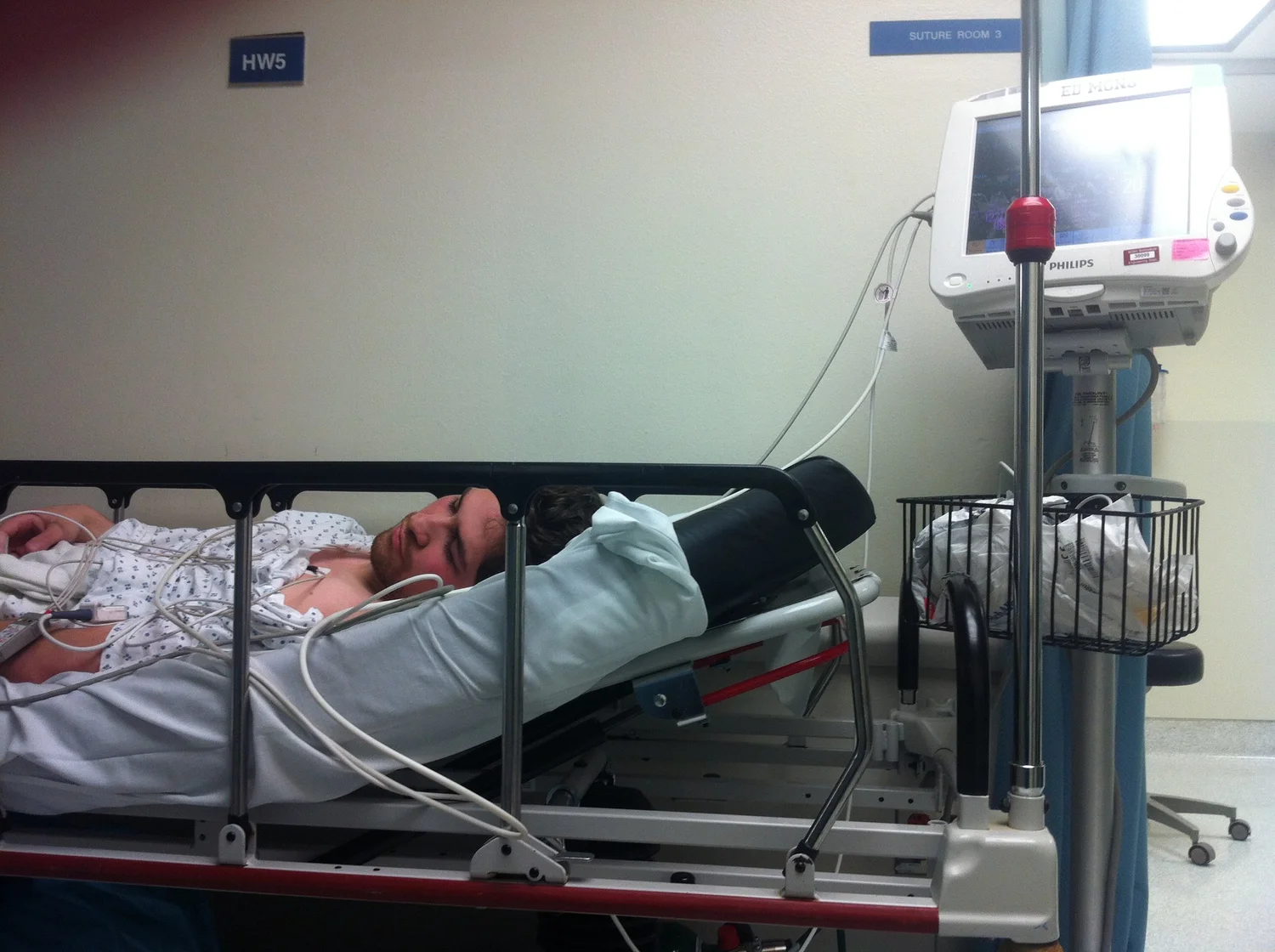
The picture came from an amusing night for Daryl, Ray, and Lorenzo. After a long evening drinking around downtown San Francisco,the three climbed into a cab to head home. Lorenzo fell asleep during the ride and would not wake up. The cab driver became concerned. Daryl and Ray tried shouting at him and slapping him awake, with no response, and eventually instructed the driver to take them directly to the nearest emergency room.
They stayed with Lorenzo through the night while doctors examined him and put him on an IV. Before leaving in the early morning, Daryl took a photograph of Lorenzo asleep in the hospital bed, knowing Lorenzo would eventually want to know what had happened to him. Years before every waking embarrassment was automatically documented on a phone, Dollars & Donuts had already learned an important rule: If something ridiculous happens to Lozo, get a picture.
Later, Lorenzo mentions Jerry Mathis, another recurring figure from the group’s Office Depot years. Jerry was an older coworker Daryl, Ray, and Lorenzo enjoyed antagonizing, largely because Jerry could be counted on to react to their nonsense with exactly the amount of irritation they were hoping for.
Lorenzo particularly enjoyed mocking Jerry for being around forty years old and still living with his mother. By the time Rich & Lozo 5 was made, Lorenzo was self-aware enough to immediately admit that this criticism had become somewhat compromised by the fact that he himself was still living with his own mother.
Daryl leaned into the history with another burst of archival photographs. One involved a genius Office Depot prank built around a piece of Styrofoam with a hole cut through it. Someone wrote GLORY HOLE beside the opening with an arrow, then photographed an unsuspecting Jerry through the hole.
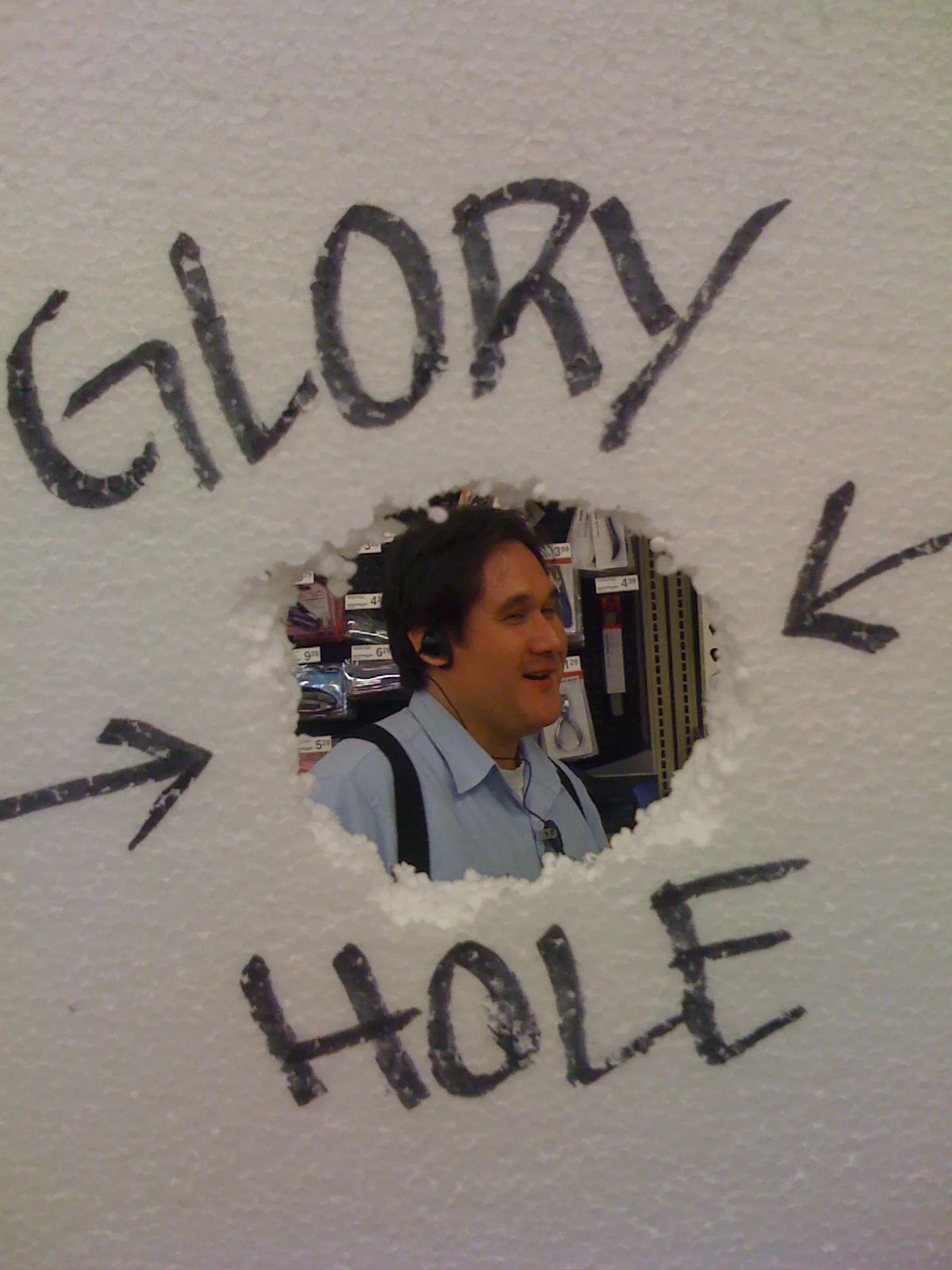
One of Ray’s friends was recruited to leave a fake public Yelp review for the Daly City Office Depot location claiming that she’d been shocked to discover a glory hole inside the store and asking for help identifying the man peering through it. The photograph of Jerry was uploaded as evidence.
Jerry’s old-school Gen X demeanor made this sort of public indignity genuinely aggravating to him, which naturally made everyone else find it much funnier. He was also intensely devoted to professional wrestling, pornography, KISS, and a duffel bag full of CDs that seemed to accompany him everywhere.
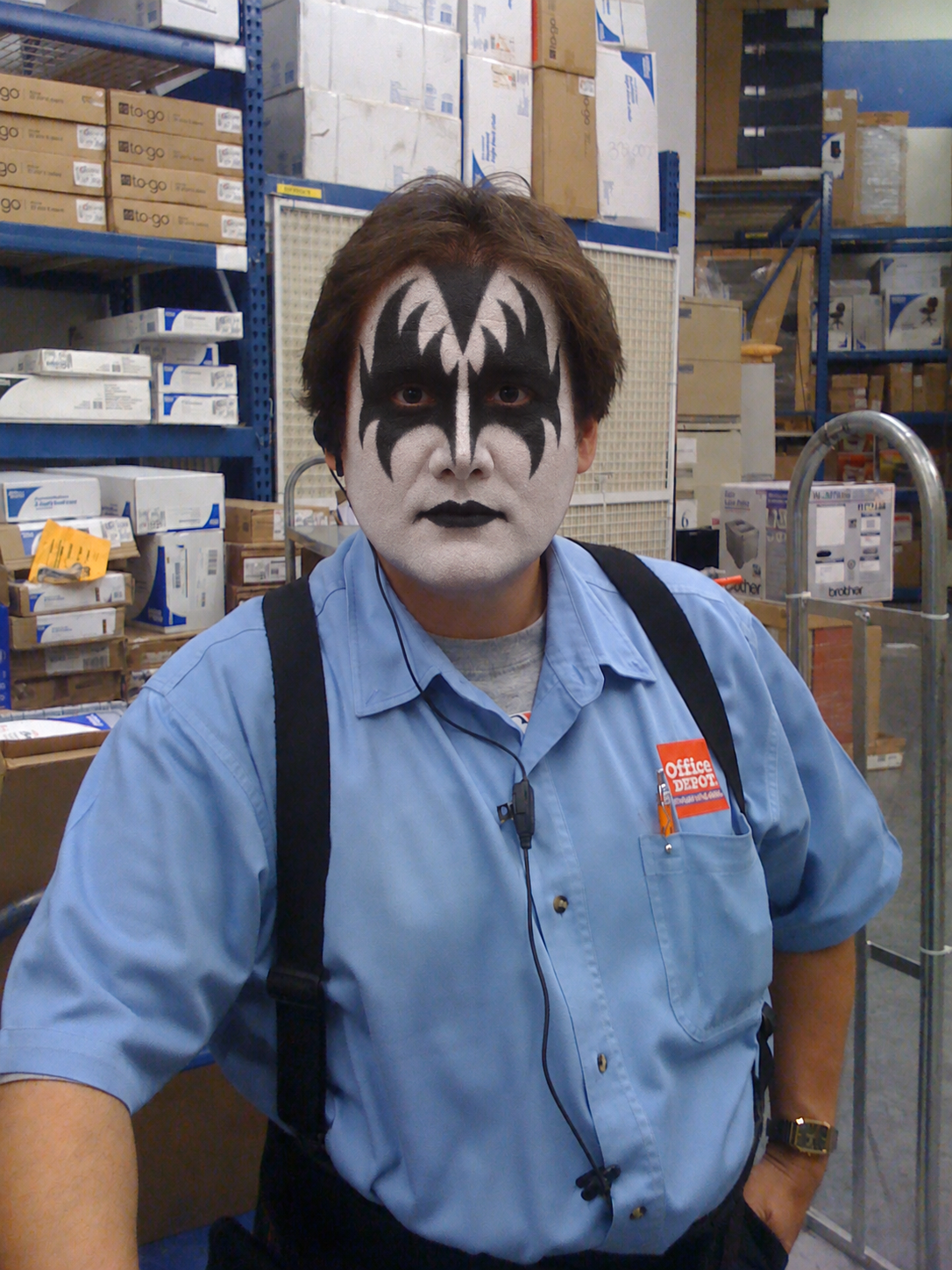
At one point the group convinced Lorenzo to challenge Jerry to a wrestling match in the middle of Office Depot while Jerry was working. Jerry initially wanted absolutely nothing to do with it. He was always strangely protective of whatever dignity he believed the workplace required.
Then Lorenzo tried to tackle him in the furniture department. Jerry couldn’t resist. A full-blown wrestling match amid the Christopher Lowell desks and chairs.
None of these photographs or stories were created for some future mythology. They were simply accumulated debris from years of friendship, retail jobs, pranks, and bad decisions. By Rich & Lozo 5, Daryl had begun realizing that this debris could itself become part of the editing language.
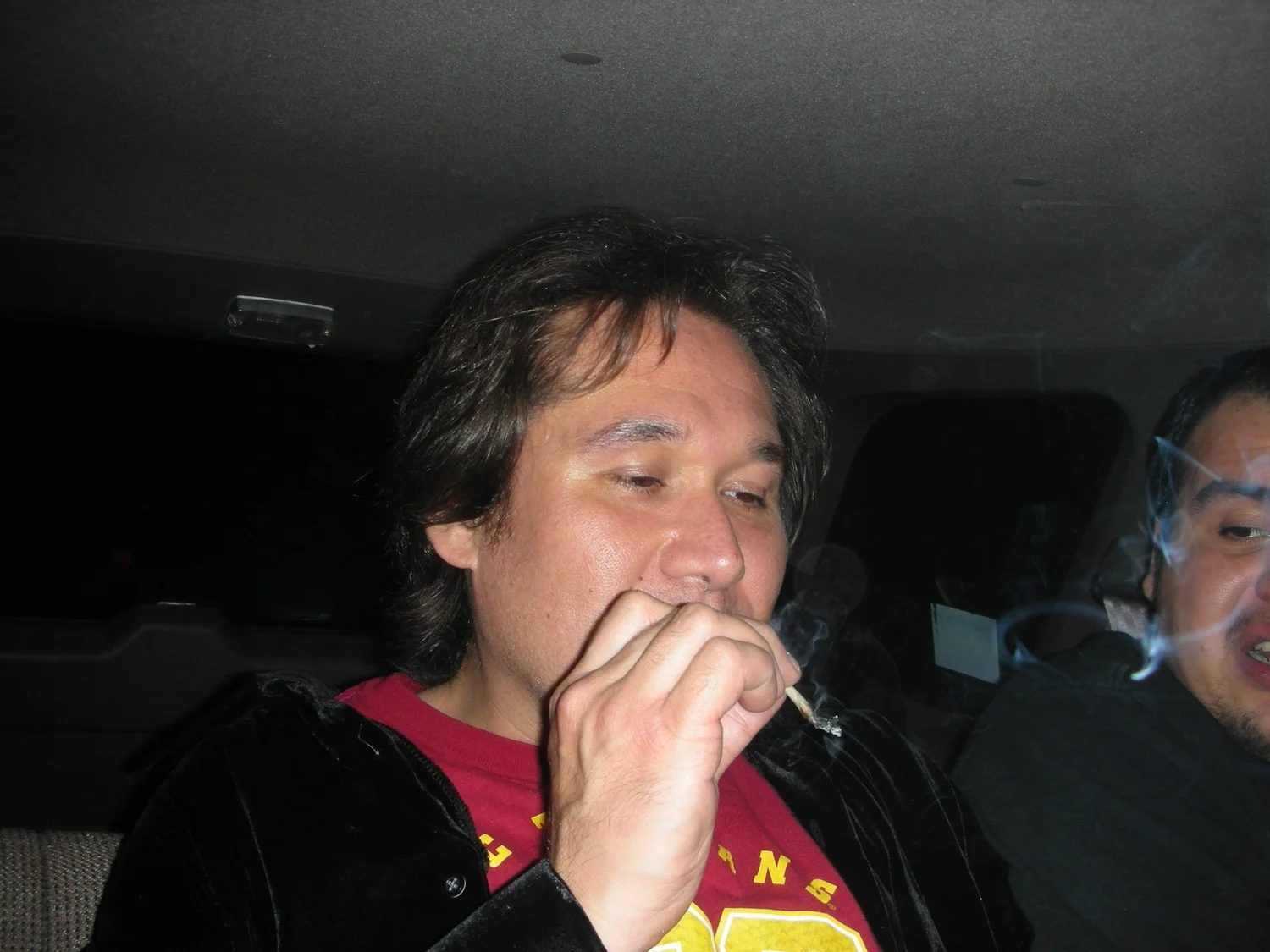
The same instinct produced an even smaller joke when Lorenzo appeared inexplicably wearing a middle-school P.E. shirt with somebody else’s name printed on it. Nobody seemed to know why Lorenzo owned the shirt.
The name was Marvin Mallari. Lorenzo explained on camera that the school had simply given him somebody else’s shirt years earlier when he needed one for P.E. Daryl immediately recognized the obvious editorial opportunity, looked Marvin up on Facebook, found a photograph, and inserted him into the movie.
It had nothing to do with anything beyond the fact that Lorenzo Ocon had somehow arrived wearing another man’s childhood gym clothes.
The fifth installment also made one genuinely significant break with the earlier films. For the first time, Rich & Lozo escaped the boundaries of El Camino High School.
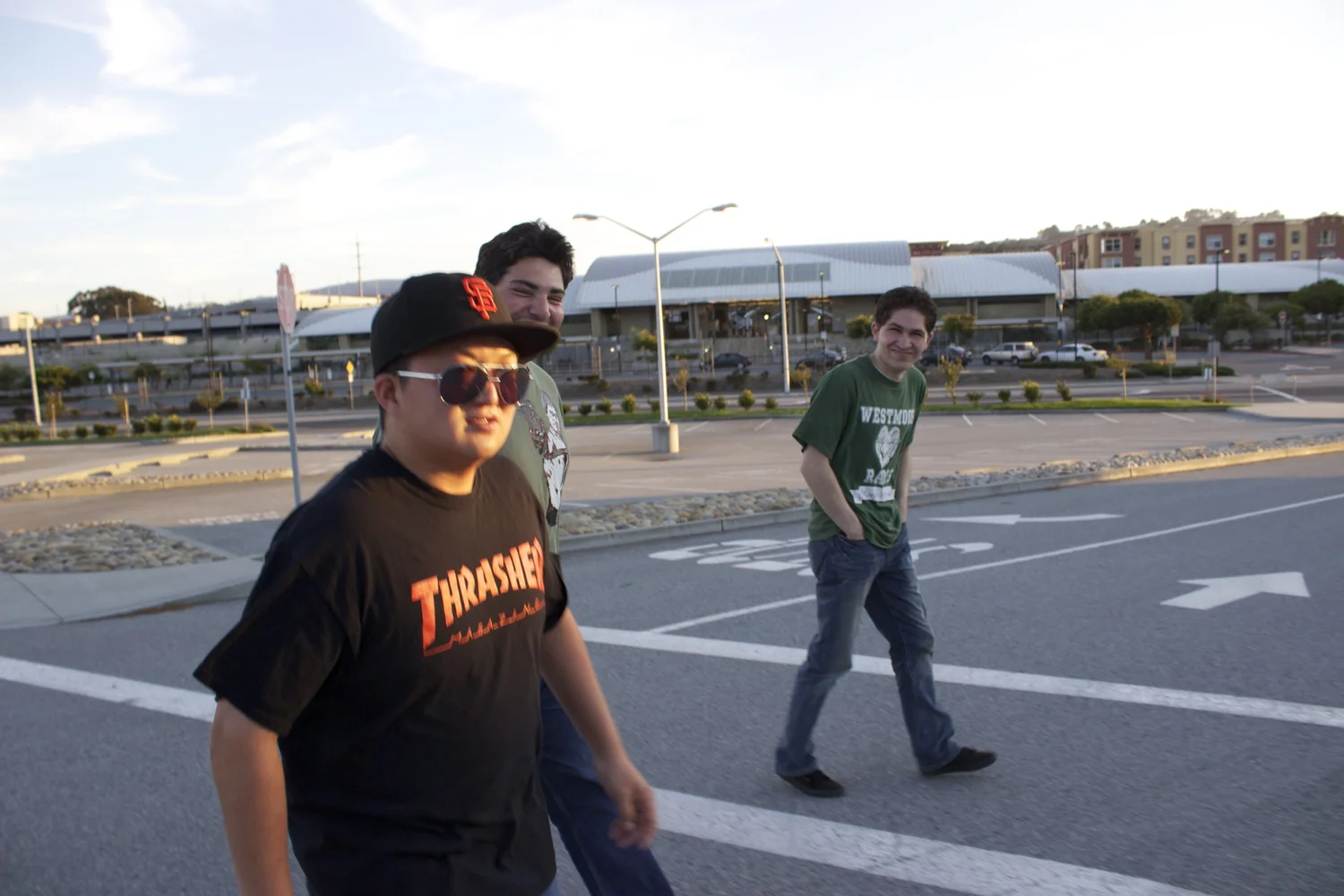
Daryl and Ray drove Rich and Lorenzo to Society Restaurant & Hookah Lounge in Burlingame, an Indian restaurant and hookah spot that Daryl, Ray, and Rich already liked. The change in surroundings briefly changes the film too. Sitting with the hookah, Lozo suddenly becomes almost reflective. He admits that he feels like he has “dropped down in coolness” over the years and describes himself as a “broken bird” who has lost his wings. For a moment, underneath all the vulgarity and nonsense, Rich & Lozo 5 acknowledges that time has actually passed.
Then Lorenzo continues being Lorenzo. Rich became increasingly embarrassed by his behavior, and everyone returned to the familiar safety of El Camino.
Back on campus, the joke becomes even more explicit. Rich and Lozo look around at the changed school, complain about the vending machines and solar panels, and finally confront the obvious question: Why were two twenty-six-year-old men still hanging around their old high school? The answer, essentially, was because they were making Rich & Lozo 5.
Ray provided the final piece. Rich & Lozo 4 had ended with Rich and Lorenzo spontaneously attempting “Yesterday,” establishing, apparently by accident, that a Rich & Lozo movie could conclude with the two of them destroying a beloved song.
For the fifth film, Ray suggested Elvis Presley’s “Suspicious Minds.” Unlike “Yesterday,” this one required preparation. The song had to be played for Rich and Lorenzo several times so they could acquire at least a passing familiarity with the lyrics before the cameras rolled. The result was exactly as dignified as expected.
By then, however, the song also felt unexpectedly appropriate. Suspicious Minds is about two people trapped in a cycle they cannot quite escape. Nearly ten years after the first Rich & Lozo, there they were again, standing at El Camino, insulting one another, breaking things, reminiscing about people nobody else knew, and singing badly for Daryl’s camera.
Daryl edited Rich & Lozo 5 on his new cylindrical Mac Pro, the so-called “trash can,” at that point the largest personal purchase he had ever made. He and Kirsten had recently moved back north after their years in Southern California and were temporarily living at his parents’ house while working in San Francisco. The return brought them physically close to much of the old Dollars & Donuts crew again, contributing to another burst of creative activity. It also meant living under one roof with Daryl’s parents, grandparents, wife, and brother. Space was limited.
Daryl carved out a small editing room in the cottage behind the house, the same structure that had still been under construction when parts of Ninja Killface were filmed there ten years earlier. For a while, it became his sanctuary. He could disappear into the backyard, shut himself away with the new Mac Pro, and work. Then his mother decided she would also like an office in the cottage. The sanctuary was no longer particularly sanctified.
Daryl might be locked into an edit when the door would suddenly open, or he would glance toward the window and discover his mother looking in to see whether he was there before quietly disappearing again. None of it was malicious, but the interruption itself became maddening. It was one of those periods when Daryl felt he suddenly understood both his father’s need for uninterrupted writing time and, somewhat less reassuringly, Jack Torrance’s attitude toward people wandering into his workspace.
Living with an entire extended family while working full time and trying to maintain an increasingly ambitious slate of films could make everything feel crowded.
Rich & Lozo 5 was the opposite. For sixteen minutes, nobody needed to build a hospital, organize a premiere, solve a production crisis, or prove that Dollars & Donuts could make serious movies. They just needed to point two cameras at Rich and Lozo and see what happened.
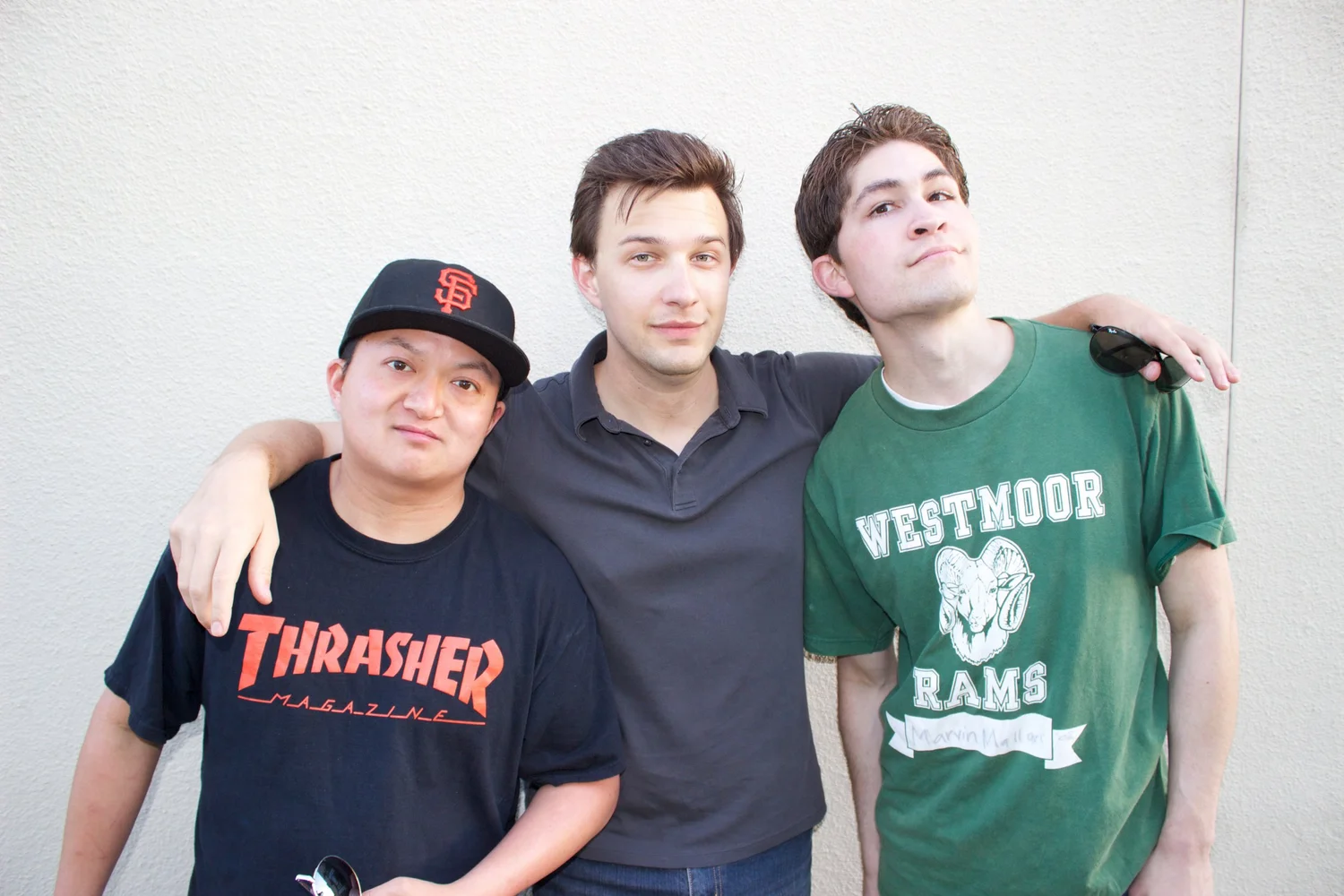
So far, Rich & Lozo 5 remains the last installment in the series. Not for lack of trying, though.
Daryl has spent the thirteen years since attempting, periodically and with varying degrees of persistence, to convince Rich and Lorenzo to make another one. So far, neither has been particularly cooperative. That has done very little to discourage him.
Because somewhere along the way, Rich & Lozo stopped being just a series of stupid little videos and became something potentially much stranger. If Daryl ever gets his way, the real project will not end with the two of them as twenty-somethings revisiting their old high school. It will keep going.
The dream is to continue making Rich & Lozo films for the rest of their lives, long enough that the series eventually becomes a kind of accidental anthropological experiment: two men captured at intervals across decades, changing physically, socially, and emotionally while the basic ritual remains the same. Teenagers in high school become young adults, then middle-aged men, then, ideally, two old men still sitting beside each other arguing, insulting one another, remembering people nobody else remembers, and singing songs they barely know.
Two lifetimes caught on tape in something close to real time. Whether Rich and Lozo like it or not. So cross your fingers. Daryl certainly hasn’t given up.